Heavy squats can leave your legs feeling so sore that even walking down the stairs becomes a challenge. This kind of post-training soreness is common, especially if you’ve pushed intensity, increased volume, or returned to squats after a break. Targeted mobility work can help ease discomfort, improve recovery, and support better squat performance over time.
Below, you’ll find the expert-selected GOWOD stretches that focus on the quads, hamstrings, adductors, and hips — the muscle groups that take the biggest hit during a squat session. Each video has been chosen to support quicker recovery and freer movement the next day.
5 stretches to try next time you squat
After an intense squat session, it becomes very difficult to walk, sit down, and stand back up. We’re going to share our tips and secrets to help you recover more quickly and regain a typical walking pattern.
Here are the 5 exercises to do to recover from a squat session:
Quad roll: a real massage to relax your quadriceps
Hamstring roll: helps relax the hamstrings
Adductor roll: often forgotten, the adductors play a major role in the squat
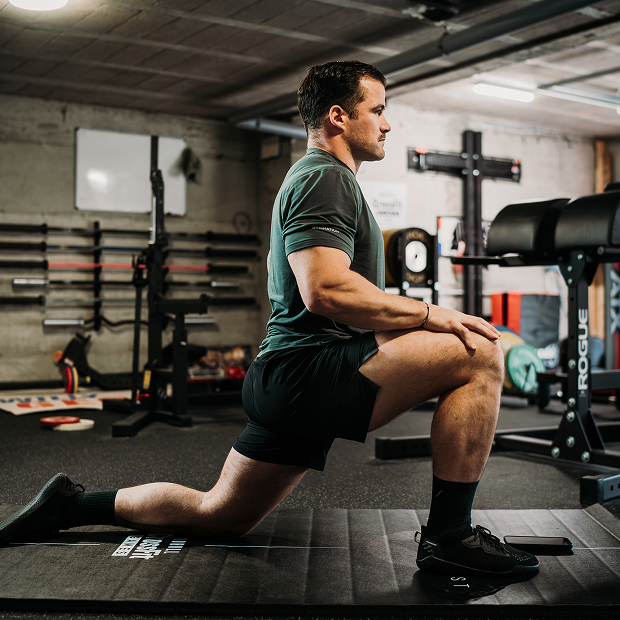
Active quad stretch: active stretch to release the quadriceps and your knees
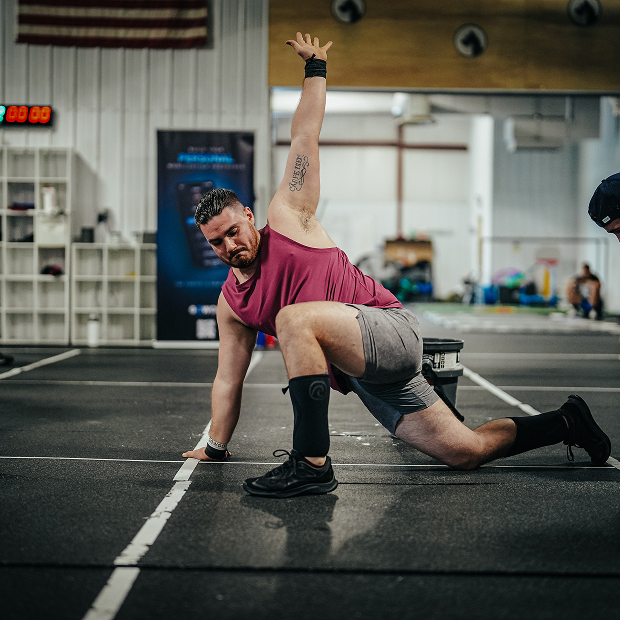
The breakdancer: releases your quadricep
Exercise 1/5: quad roll
Focus
Details
Timing
Repeat for 1 min
Stimulus
The pressure should allow you to stay relaxed
Instructions
• Lay with your thigh on the roller with your foot relaxed
• Use your hands to support your body
• Maintain a rhythmic rate of 50 movements per minute
Targeted areas
Quad
Equipment required
Foam roller
Exercise 2/5: hamstring roll
Focus
Details
Timing
Repeat for 1 min
Stimulus
The pressure should allow you to remain relaxed
Instructions
• Place roller under your thigh
• Keep knee bent slightly
• Maintain a rhythmic rate of 50 movements per minute
Targeted areas
Hamstrings
Equipment required
Foam roller
Exercise 3/5: adductor roll
Focus
Details
Timing
Repeat for 1 min
Stimulus
The pressure should allow you to remain relaxed
Instructions
• Sit with the roller perpendicular to your thigh
• Move the roller up towards your pelvis
• Maintain a rhythmic rate of 50 movements per minute
Targeted areas
Adductors
Equipment required
Foam roller
Exercise 4/5: active quad stretch
Focus
Details
Timing
Repeat for 1 min
Stimulus
Stretch in the front of the thigh and hip
Instructions
• Knee bent close to the wall, top of the foot flat against the wall
• Front leg bent, foot flat
• Repeated back-and-forth movements, torso upright
Targeted areas
Quad, Hips
Equipment required
None
Exercise 5/5: the breakdancer
Focus
Details
Timing
Repeat for 1 min
Stimulus
Stretching at the back of your thigh and knee
Instructions
• Extend your leg flat
• Place your opposite foot against your thigh
• While rolled back, grab the foot of your extended leg
Targeted areas
Hamstrings, Calves, Lumbar
Equipment required
None
Why your legs feel so sore after squats
Delayed-onset muscle soreness is common after intense squat sessions. The squat recruits large muscle groups that respond strongly to high mechanical load, especially when you introduce:
Volume increases.
New variations, such as front squats or tempo work.
Higher intensity or lower rep schemes.
Greater depth or range of motion.
Eccentric loading, which occurs as you lower into the squat, produces micro-tears in the muscle fibres. This is part of the adaptation process but often leads to soreness 24 to 72 hours later.
Key muscles involved in squats
Squats use multiple large muscle groups throughout the lower body and core. When any of these tighten, soreness usually intensifies.
Muscle group
Role in the squat
Muscle group targeted
Quadriceps
Knee extension and drive out of the bottom position
High load and eccentric demand
Hamstrings
Hip control and stability
Increased tension from slowing the descent
Glutes
Hip extension and power production
Heavy force requirement during ascent
Adductors
Stability, depth, and knee alignment
Deep positions stretch and load the tissue
How mobility supports better squat performance
Mobility work doesn’t just ease soreness. It also contributes to improved movement quality. Addressing areas such as the quads, adductors, hips, and hamstrings can support:
More consistent squat depth.
Better knee tracking.
Improved hip stability.
Reduced compensations such as pelvic tuck or lower back rounding.
More efficient force transfer.
Athletes often find that consistent mobility work makes squatting feel smoother, reduces stiffness between sessions, and supports overall training volume.
Additional recovery ideas you can combine with these stretches
Athletes commonly use these routines to speed up recovery:
Light aerobic movement to increase circulation.
Hydration and adequate protein intake.
Heat, which can help reduce stiffness.
Low-load mobility circuits between training days.
Sleep quality improvements, as recovery relies heavily on rest.
Combining mobility work with these habits often supports faster recovery and better readiness for your next strength session.
FAQs
What helps the most when your legs are too sore to walk after squats? Targeted mobility work can help, especially on the quads, hamstrings, and adductors. Light movement, such as walking, can also support with blood flow.
Is it normal for squats to make my legs extremely sore? Yes. Squats load large muscle groups, so significant soreness is common after heavy training or increased volume.
Should I stretch before or after squats? Dynamic mobility is often used pre-session, while targeted stretches such as the ones above are effective post-session.
Can stretching reduce muscle soreness? Stretching can help reduce stiffness and support recovery by improving circulation and restoring comfortable range of motion.
Why do my quads hurt more than my hamstrings after squats? The quads handle a large portion of the load, especially during the eccentric phase, which often results in greater soreness.
UNLOCK YOUR BODY
Start your journey to better mobility
You’re only 3 steps away from unlocking your full potential.
Download the GOWOD App
Take your assessment
Improve your mobility one stretch at a time with GOWOD Premium