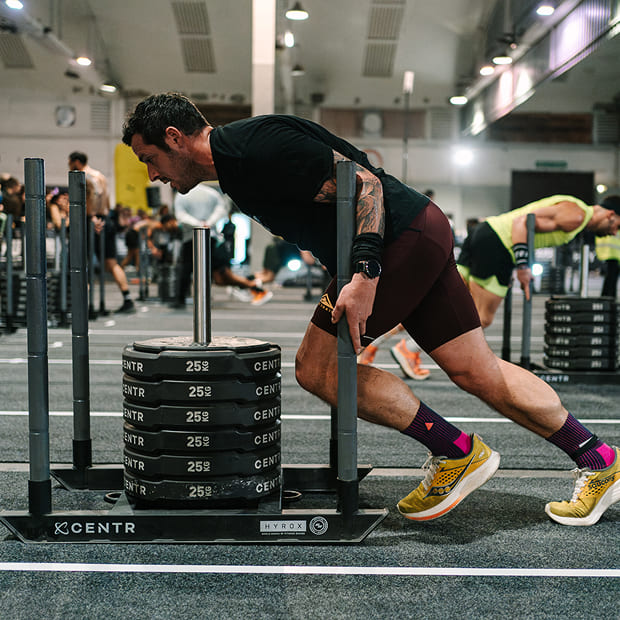
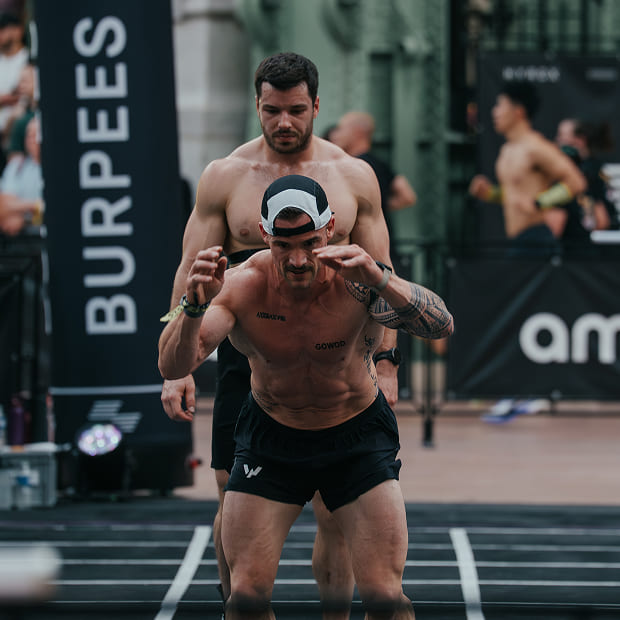
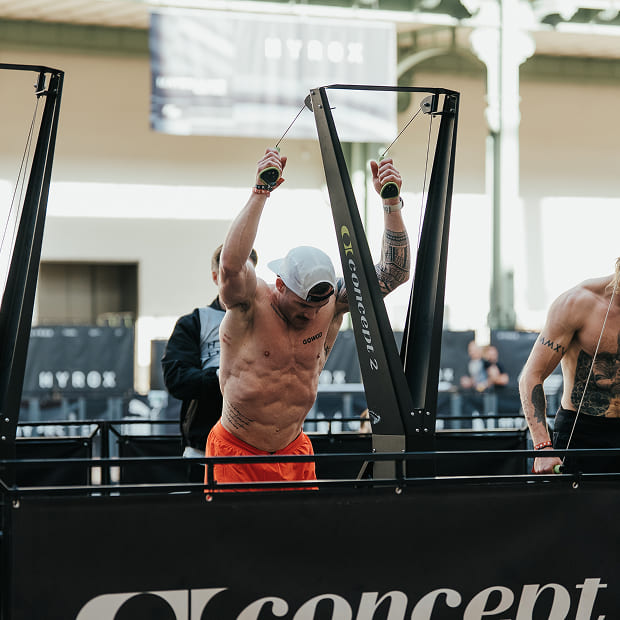
A CrossFit workout is a structured training session that blends strength training, gymnastics-style bodyweight movements, and cardiovascular conditioning. Instead of focusing on one physical quality at a time, workouts are designed to challenge multiple systems within the same session.
Movements are typically performed through full ranges of motion and often under fatigue, which places meaningful demands on coordination, joint control, and mobility. This combination is what makes CrossFit efficient and engaging for many people, and also why preparation and recovery matter so much.
Mobility and joint preparation support access to the positions required in common CrossFit movements, such as deep squats, stable overhead lifts, and controlled gymnastic patterns. Tools like GOWOD help athletes prepare for these demands, move more efficiently during training, and recover more effectively afterwards.
A typical CrossFit workout focuses on more than one physical quality at the same time. Instead of separating strength, cardio, and skill work into different sessions, CrossFit combines them within a single workout, often using varied movements and time-based formats.
From gym to gym and program to program, the specific exercises and structure can look very different. What stays consistent is the underlying approach. Most CrossFit workouts are built around the same core principles.
While these principles are consistent across CrossFit, not every CrossFit workout looks the same. Programming can vary widely between gyms and training providers, with different emphasis on lifting, gymnastics, conditioning, or volume. What remains consistent is the intent to develop well-rounded fitness rather than specialising in a single area.
Most CrossFit workouts follow a similar session structure, even though the specific movements, loads, and formats change from day to day. This structure helps balance performance, safety, and progression across different training goals.
The warm-up prepares the body for the demands of the session ahead. It typically includes light cardiovascular work, joint mobility, and activation drills to improve access to key positions.
In practice, a CrossFit warm-up often includes a short pulse-raising element such as rowing or jogging, followed by mobility work for the shoulders, hips, or ankles, and then low-intensity versions of the movements used later in the session.
This portion of the session focuses on developing strength, power, or technical ability. Depending on the day, it may involve barbell lifting, gymnastic skill progressions, or controlled strength work.
For example, this segment might include building to a moderate load on a squat or clean, practising handstand positions, or working through strict pulling progressions. The emphasis is usually on movement quality, positioning, and consistency rather than fatigue.
The metcon is the main conditioning component of a CrossFit workout. It typically combines multiple movements performed for time, reps, or rounds, often with limited rest.
A metcon might pair barbell lifts with bodyweight movements and short conditioning efforts, such as rowing or running. As fatigue builds, pacing, efficient transitions, and joint control become increasingly important.
The final part of the session focuses on supporting recovery and preparing the body for future training. This may include light movement, breathing work, or targeted mobility exercises.
In many gyms, this looks like slow cycling or walking followed by mobility work for areas heavily loaded during the workout, such as the shoulders, hips, or spine. While often brief, this phase plays a key role in managing stiffness and training volume over time.
CrossFit uses a range of workout formats to create different physical and physiological demands. While the movements may overlap, each format changes how intensity is experienced, how pacing is managed, and how fatigue affects movement quality.
Each format places slightly different demands on the body. Some emphasise sustained pacing, others expose technical weaknesses under fatigue, and some test the ability to recover quickly between efforts. Across all formats, efficient movement and adequate mobility play a key role in maintaining technique as intensity or volume increases.
CrossFit workouts are built around compound, multi-joint movements that require the body to produce force, control position, and tolerate fatigue at the same time. Rather than isolating single muscles, these movements involve coordinated action across multiple joints and muscle groups.
Because these movements involve multiple joints and large ranges of motion, the shoulders, thoracic spine, hips, ankles, and trunk are under constant demand. When mobility or control is limited, the body often compensates as fatigue increases, making movement quality and preparation especially important.
Take our FREE mobility and flexibility test to identify your strengths and areas for improvement. In minutes, get a detailed breakdown of each body zone with insights and personalized guidance to progress.
CrossFit workouts ask the body to handle multiple demands at the same time. Strength, movement quality, and conditioning are often challenged together, which is why fatigue has such a noticeable impact on how workouts feel.
CrossFit workouts develop several physical qualities simultaneously, often under fatigue, rather than focusing on one quality in isolation. This is one of the reasons people often describe CrossFit as efficient, but it also explains why workouts can feel demanding.
Together, these adaptations help explain why many people find CrossFit transferable to daily activities and sport, and why discussions around whether CrossFit is good for you often come down to how well these demands are managed.
{{strava-cta="/components"}}
Mobility is frequently discussed in relation to CrossFit because many of the movements used in training rely on joints being able to move through large, controlled ranges of motion. When those ranges are limited, it tends to show up quickly during workouts.
Consistent mobility work helps athletes access the positions CrossFit demands without forcing range, which becomes increasingly important as training volume and complexity build over time.
If you want to see how CrossFit workouts look in practice, there are many free and paid options you can access today.
The official CrossFit website publishes workouts of the day (WODs), Open workouts, and educational content that reflect the core principles of CrossFit programming.
Joining a CrossFit gym, often referred to as an affiliate or box, is one of the most common ways people experience CrossFit. Most gyms offer introductory sessions or on-ramp programs that teach movement fundamentals, explain workout structure, and help new members scale workouts appropriately.
For structured online programming, platforms such as HWPO Training and Mayhem Nation provide professionally written programs developed by experienced CrossFit athletes and coaches.
Many CrossFit workouts are also shared on YouTube, where athletes, gyms, and coaches post full sessions, technique breakdowns, and competition workouts.
Finally, there are well-known free CrossFit workouts that are widely shared and repeated, such as benchmark and Hero workouts. A common example is Murph, a high-volume workout often completed on Memorial Day, which combines running, pull-ups, push-ups, and squats.
CrossFit asks a lot of your body, and those demands change from day to day. GOWOD exists to help you prepare for the positions you train, move more efficiently during workouts, and recover between sessions, all based on how you actually move. By making mobility part of your training routine rather than an afterthought, GOWOD helps support consistency, control, and long-term progress in CrossFit.
You’re only 3 steps away from unlocking your full potential.