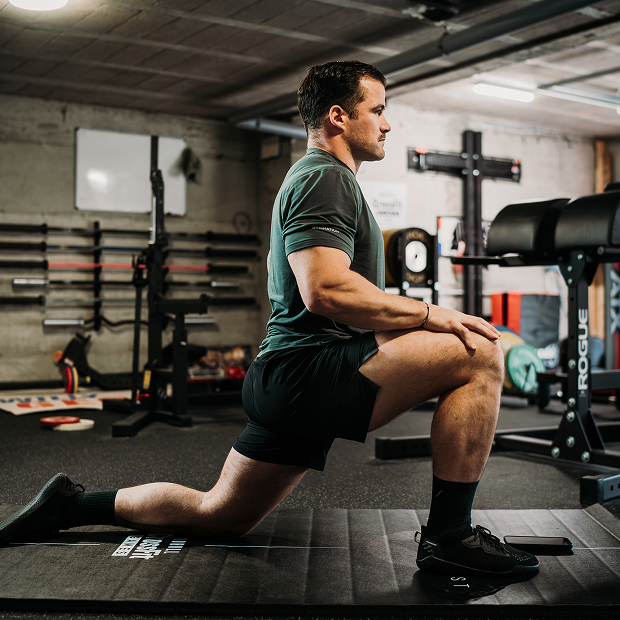
Stretching before training is one of the most common habits in fitness, yet it is also one of the most misunderstood. Some athletes stretch religiously before every session, while others avoid it altogether after hearing it might reduce performance or increase injury risk.
The reality sits somewhere in the middle. Its value depends on the type of stretching used, the demands of the session, and how well your body is already prepared for the positions and loads you are about to train.
Understanding when stretching helps, when it does not, and how to use it effectively is key to better movement quality, safer training, and more consistent progress.
Most people stretch before a workout because of how their body feels or what they believe stretching is supposed to do. It is often a response to stiffness, habit, or a desire to feel more prepared before training.
Common reasons include:
These reasons are understandable and often come from real experiences. A runner may stretch their calves and hamstrings before a session because their legs feel tight after sitting all day. A lifter may stretch their hips or shoulders before squatting or pressing to feel more comfortable at depth or overhead. An athlete in a rotational sport such as tennis or baseball may stretch the shoulders and torso to feel freer through their swing or throw.
However, stretching does not work the same way in every situation.
Feeling tight does not always mean a muscle is short or needs more length. In many cases, it reflects fatigue, increased muscle tension, or reduced tolerance to moving through a certain range. Injury risk is also influenced by factors such as training load, movement quality, fatigue, and recovery, not flexibility alone.
This is why stretching before training can feel helpful in some sports or sessions and less effective in others. The real value of pre-workout stretching comes from whether it prepares your body for the specific movements and demands of the workout, rather than simply following a routine out of habit.
“I don’t stretch the same way before every session. Some days I feel tight and need to work on a specific area, other days I literally go through my whole body. Stretching and mobility are important, but knowing when to do it and what to focus on matters more than just doing it out of habit. This is where GOWOD makes it easy” - Kristian Blummenfelt, Olympic and World Champion Triathlete
Before you start a workout, your body is not in the same state it will be once you are moving. At rest, many of the systems involved in strength, speed, coordination, and control are operating at a lower level.
Muscle tissue is cooler and less elastic, which can make movements feel stiff or restricted at the start of a session. Joints also produce and circulate less synovial fluid when you are not moving, which can make positions feel less smooth or comfortable, particularly in deeper ranges such as squats or overhead positions.
The nervous system also plays a major role. At rest, communication between the brain and muscles is slower and less coordinated. As you warm up, nerve signals become quicker and more precise, improving timing, balance, and the ability to produce force when needed. This is one reason movements often feel more controlled and powerful partway through a workout compared to the first few minutes.
Several key factors influence how ready your body is to train:
A proper warm-up helps shift all of these systems from a resting state to a training-ready state. This is why preparation matters even when you feel generally fit or strong.
Stretching can be part of this process, but only when it supports the movements and positions you are about to use. When stretching is targeted and followed by movement and activation, it can help the body feel more prepared. When it is random or disconnected from the workout, it often has little effect on how you actually move once training begins.
Stretching and mobility are often used interchangeably, but they are not the same thing.
Stretching is mainly about reducing tension or increasing muscle length. It can be active or passive.
Mobility is about being able to move a joint through its range of motion with control ( active only ). It combines flexibility with strength and coordination.
In simple terms:
This is why mobility tends to carry over more effectively into training. Being able to access a range of motion is useful, but being able to control that range under load, speed, or fatigue is what actually improves movement quality during exercise. This is the problem the GOWOD app is designed to address, helping athletes improve mobility through personalised daily routines based on how they move and the demands of their training.
This one is very simple. If you are fighting against your own body to perform a squat before you even start fighting the external load, you are wasting unnecessary energy.
For example, if limited ankle, hip, or thoracic mobility makes it difficult to reach a stable squat position, part of your effort is spent working around those restrictions. That energy is no longer going into producing force against the weight.
If, by improving your mobility, you only have to apply your energy to the external load, imagine the potential you will have. Better access to the required positions allows force to transfer more efficiently through the body, which can support better performance and more consistent movement.
When mobility improves, technique and positioning tend to improve as well. When joints can move through the required ranges of motion for an exercise, the body is less likely to compensate.
Compensations occur when another area of the body tries, often poorly, to make up for a lack of range of motion elsewhere. Over time, this can increase stress on tissues that are not designed to handle repeated load, which may increase injury risk.
Stretching alone does not prevent injury. However, improving mobility and positioning before training can help reduce avoidable strain by allowing the body to move as intended.
No matter which sport you practise, your body needs to be ready to handle stress. Running exposes the body to repeated impacts, weightlifting places high demands on joints and connective tissue through heavy loads, and sports such as baseball involve repeated high-speed throwing motions.
Your body must be prepared to absorb these demands. Working on your range of motion and mobility before a session helps tissues tolerate load more effectively and reduces the shock of sudden exposure to demanding positions.
“In climbing, if you can’t get into the position properly, everything feels harder. You end up pulling more than you need to and losing efficiency. Stretching and mobility before a session help me move through problems with more control instead of fighting my own body.” - Toby Roberts, Olympic Gold Medallist, Men’s Boulder & Lead Combined
Take our FREE mobility and flexibility test to identify your strengths and areas for improvement. In minutes, get a detailed breakdown of each body zone with insights and personalized guidance to progress.
Stretching or mobility work before a workout is most useful when it helps you access the positions your session will demand. Rather than being a fixed rule, pre-workout stretching tends to be most effective when movement quality or joint access would otherwise limit how you train.
Pre-workout stretching or mobility work is often helpful when:
In these situations, targeted mobility work can help you move more comfortably and confidently before adding speed, load, or intensity. The goal is not to stretch everything, but to prepare the areas that matter most for that session so movement feels smoother and more controlled once training begins. GOWOD supports this approach by guiding athletes through mobility routines that focus on the specific joints and positions required for their sport or workout. Download the GOWOD app to get started.
Stretching is not always the best option before training, particularly when it does not align with the demands of the session or the individual’s needs. In some situations, stretching can be neutral at best or counterproductive at worst when applied without context.
Stretching may need to be modified or limited when:
In these situations, activation and control-based mobility work is often more appropriate. Preparing the body to move well under load, rather than simply increasing the range of motion, tends to have a more positive effect on performance and joint stability.
Pre-workout stretching is often treated as something that should be done, rather than something that should serve a clear purpose. When stretching is applied without intent, it rarely improves how the body actually moves once training begins.
Below are some of the most common mistakes athletes make with pre-workout stretching and why they matter.
An effective pre-workout routine is not about doing more exercises. It is about preparing the body for the exact demands of the session ahead. The goal is to arrive at your workout feeling ready to move well, produce force, and maintain control as intensity increases.
A well-structured pre-workout routine generally includes four key phases:
This progression is what allows mobility work to transfer into training. Without it, stretching often feels good but has little impact on how you actually move during the workout.
This is the principle behind how the GOWOD app structures its routines. Instead of generic warm-ups, GOWOD focuses on preparing the positions you will use in training, based on your mobility profile and the demands of your sport or workout. The result is preparation that supports performance, consistency, and long-term joint health, rather than simply filling time before you start lifting or running.
Stretching before a workout can help in the moment, but real benefits come from consistent mobility work over time.
Occasional stretching may make you feel looser, but it rarely changes how well your body handles training week after week. Long-term progress depends on being able to access the positions your training demands without accumulating stiffness, fatigue, or compensations.
When mobility is trained consistently, not just before certain sessions, movement becomes more efficient and training is easier to sustain as volume and intensity increase. The goal is not to stretch before every workout, but to build a body that is prepared to train consistently.
This is why GOWOD focuses on consistency, using individual assessments and daily mobility routines to help athletes maintain long-term movement quality rather than relying on occasional stretching. Download GOWOD now to get started.
You’re only 3 steps away from unlocking your full potential.