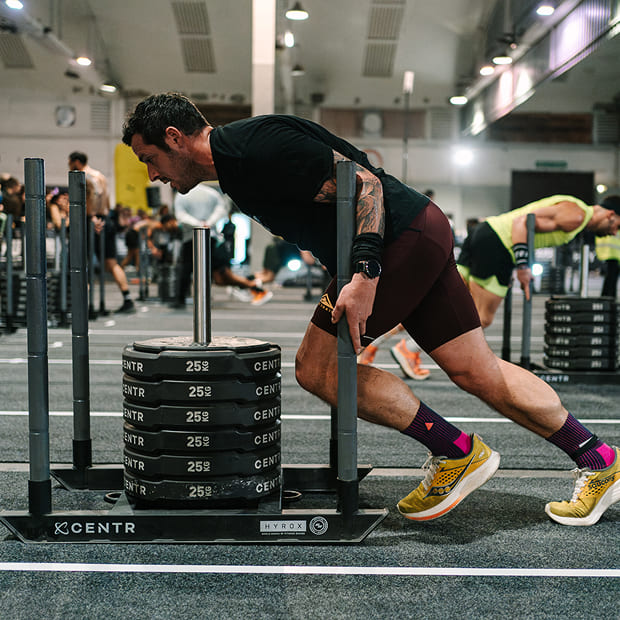
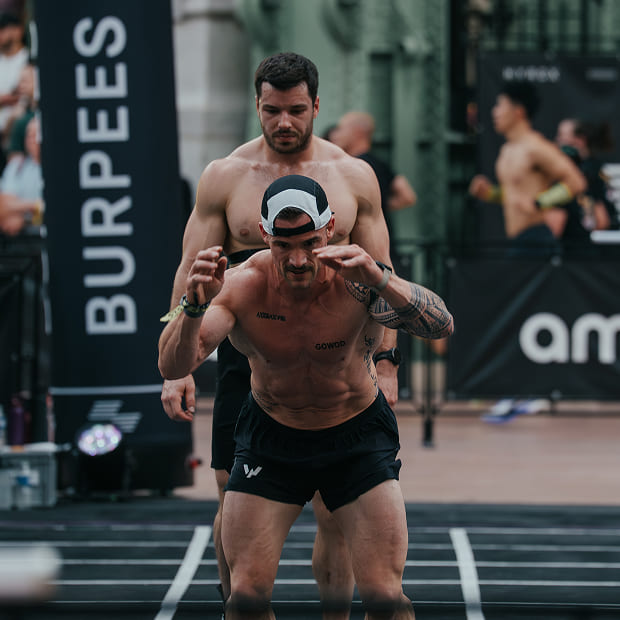
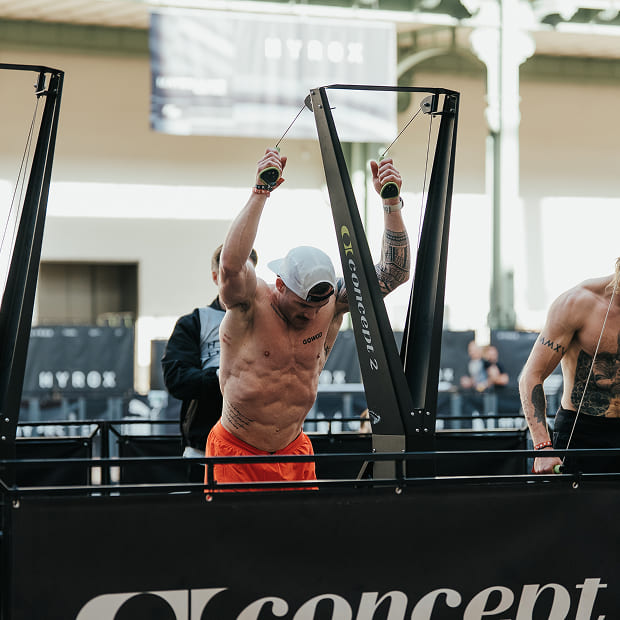
CrossFit can be safe when the demands of the workout match the capacity of the athlete performing it. From a physical therapy perspective, safety is less about the name of the training method and more about how well your body can tolerate load, move through required positions, and recover between sessions.
CrossFit does not create poor mobility or imbalances. What it often does is expose them. When an athlete lacks overhead range, hip rotation, or ankle mobility, those limitations become obvious during full-depth squats, Olympic lifts, or high-repetition gymnastics work. The workout is not the problem, the underlying restriction is.
Injury risk is influenced by several variables, including coaching quality, load progression, fatigue management, and most importantly, whether the athlete can actually access the positions the movements require. If you cannot safely reach a position, your body will compensate. Over time, those compensations may increase tissue stress.
Mobility and recovery are therefore not optional add-ons to CrossFit. They are part of what allows an athlete to train at intensity while maintaining control. Adequate joint range, strength at end range, and structured recovery work support better movement under load and better tolerance to volume across the week.
This is where structured mobility work becomes essential. GOWOD helps athletes identify restrictions, improve usable range of motion, and manage recovery so that training stress matches tissue capacity rather than exceeding it.
In training, safety means applying stress that the body can adapt to without exceeding its current tolerance. It means loading joints in positions they can control. It means accumulating volume at a rate the tissues can recover from.
Intensity alone does not make CrossFit unsafe. Poor positioning under intensity does.
If an athlete has the mobility to reach depth in a squat without spinal compensation, the strength to stabilise overhead, and the awareness to scale when fatigued, the same workout that looks aggressive on paper may be entirely appropriate.
Safety is individual. Two athletes can perform the same session with completely different risk profiles depending on mobility, movement quality, injury history, and recovery habits.
From a clinical standpoint, mobility is often the first limiter. When range is restricted, the body borrows motion from somewhere else. That is where unnecessary joint stress often begins.
Safety in CrossFit is rarely determined by a single workout. It is shaped by how stress is applied, how well the body can tolerate it, and how consistently recovery is managed.
Several key factors influence this balance:
Effective coaching helps athletes maintain joint alignment and efficient mechanics under load. Small positioning errors, especially in overhead or deep squat movements, can increase stress over time if not corrected early.
Training should reflect current capacity, not aspiration. Increasing load, adding volume, or progressing to higher-skill movements before mobility and control are established may place unnecessary strain on joints and soft tissue.
If an athlete cannot reach a stable overhead position, full squat depth, or neutral hinge pattern, the body will compensate. Over time, repeated compensation may increase tissue stress. Adequate mobility allows load to be distributed more evenly across joints.
Fatigue reduces control. Without sufficient recovery, even well-performed movements can begin to deteriorate. Monitoring soreness, stiffness, and general readiness plays a meaningful role in long-term safety.
Past injuries often alter movement strategies. Limited range, residual weakness, or protective patterns may persist and influence how load is absorbed.
CrossFit sessions are demanding. Without following mobility exercises and structured recovery, stiffness and tissue stress can accumulate across the week, gradually reducing movement quality.
When these factors are aligned, training stress is more likely to match tissue capacity. When they are neglected, load may exceed what the body is prepared to handle, increasing the likelihood of discomfort over time.
Specific CrossFit movements require greater coordination, mobility, and positional control, which increases their technical demand rather than making them inherently dangerous.
These movements become riskier when mobility is limited, technique deteriorates, or fatigue overwhelms control.
In most cases, CrossFit-related discomfort does not come from one specific workout. It develops from repeated exposure to stress that exceeds the body’s current capacity, especially when preparation and recovery are inconsistent.
From a clinical perspective, common contributing factors include:
Limited mobility restricting safe positions
When an athlete lacks the range to reach stable overhead, deep squat, or hinge positions, the body often compensates. Over time, repeated compensations can increase stress on joints and surrounding tissue.
Technique breakdown under fatigue
As fatigue builds, joint control and timing may decrease. Without adequate mobility and positional strength, athletes may lose alignment, especially during high-repetition or time-based workouts.
Progressing load or skill too quickly
Adding weight, volume, or advanced gymnastics skills before foundational mobility and control are established may overload tissues that are not yet prepared.
Insufficient recovery between sessions
CrossFit places meaningful stress on muscle, tendon, and connective tissue. Without structured recovery, including mobility work to manage stiffness and restore usable range, tissue tolerance can gradually decline.
Repetitive compensatory movement patterns
When restricted joints repeatedly borrow motion from adjacent areas, stress accumulates in places not designed to absorb it long term.
High-repetition volume without positional preparation
Large training volumes amplify small technical errors. If an athlete cannot consistently access required positions, repetition multiplies strain.
These factors rarely cause immediate injury in isolation. More often, they increase cumulative tissue strain over time, particularly when mobility limitations and recovery gaps are left unaddressed.
Take our FREE mobility and flexibility test to identify your strengths and areas for improvement. In minutes, get a detailed breakdown of each body zone with insights and personalized guidance to progress.
CrossFit can be safe for beginners when coaching, scaling, and movement education are prioritised over intensity or speed. Early participation should focus on learning how to move well and understanding what positions feel stable and controlled, rather than completing workouts exactly as prescribed.
Beginners benefit most from spending time on foundational movement patterns, including squats, hinges, presses, and pulls, before progressing to heavier loads or more complex skills. This stage is not just about strength, it is about building mobility and control in the positions CrossFit regularly demands. Developing consistency here helps reduce unnecessary stress on joints and soft tissues as training intensity increases.
To help reduce risk, beginners should generally focus on:
Many beginners experience rapid improvements in coordination, movement confidence, and overall fitness as their bodies adapt to new demands. Gradual progression allows tissues to build tolerance to load while mobility and control improve alongside strength. This combination supports safer, more sustainable participation over time.
Mobility influences CrossFit safety by helping athletes reach training positions with control, rather than forcing the body to compensate. When a joint cannot move as required, adjacent areas often absorb extra stress, which may increase the likelihood of discomfort or overload over time.
Adequate upper-body mobility helps athletes maintain stable positions during overhead lifts and gymnastics, reducing unnecessary strain as load or fatigue increases. Mobility in the hips and ankles supports safer squatting and barbell positions, especially when catching weight or moving through depth.
As workouts become faster or more demanding, limited mobility can make it harder to maintain good positions. This often leads to rushed movement, loss of control, or technique breakdown, all of which may increase stress on joints and soft tissue. Improving mobility can help athletes move more consistently, even when tired.
Mobility work also supports safety by improving recovery between sessions. Managing stiffness may help athletes tolerate regular training without accumulating excessive tightness that affects movement quality.
Flexibility alone is not enough. For mobility to contribute to safer training, its range of motion must be usable and controlled, allowing athletes to maintain stable positions throughout their workouts.
Fatigue can reduce movement control, timing, and joint stability. As athletes tire, awareness of positions such as bar path, spinal alignment, or overhead control may decrease, which can affect technique.
In high-repetition or timed workouts, fatigue increases the likelihood of technical errors if pacing is not managed. Adjusting intensity helps athletes maintain safer mechanics throughout the session.
Mobility and strength in key positions help athletes tolerate fatigue more effectively. When joints can access required ranges with control, it becomes easier to maintain form as tiredness sets in, supporting safer training over time.
GOWOD is designed to support the physical qualities that enable athletes to train consistently and with improved movement control. By focusing on mobility, positioning, and recovery, GOWOD helps athletes prepare for training demands and manage how their bodies respond over time.
By helping athletes move better and recover more effectively, GOWOD supports sustainable, high-quality CrossFit training.
Is CrossFit more dangerous than other types of training?
Research suggests injury rates in CrossFit are comparable to those of other recreational sports when coaching and scaling are appropriate. Risk appears to depend more on how training is applied than on the method itself.
What movements cause the most injuries in CrossFit?
Discomfort or injury is more often associated with fatigue, limited mobility, or excessive volume rather than specific movements. Olympic lifts and gymnastics skills carry higher technical demand, which may increase risk if they are poorly managed.
How can beginners stay safe when starting CrossFit?
Beginners should prioritise coaching, scale load and complexity, focus on movement quality, and address mobility limitations early in their training.
How important is mobility for preventing injuries in CrossFit?
Mobility plays an important role by helping athletes access required positions and reducing compensatory movement patterns that can increase joint stress.
Should I avoid specific movements if I have previous injuries?
Previous injuries may require modifications. In many cases, movements can be adapted rather than avoided entirely, provided they are scaled and coached appropriately.
Can CrossFit be adapted for older adults or those with limited mobility?
Yes. CrossFit is highly adaptable. Load, volume, range of motion, and movement selection can be adjusted to suit individual capacity.
Does training intensity make CrossFit unsafe?
Intensity alone does not make training unsafe. Load management, fatigue accumulation, movement quality, and recovery habits are often more influential factors.
You’re only 3 steps away from unlocking your full potential.