Based on mobility data from 27,686 GOWOD users, women demonstrate greater overall flexibility than men, scoring an average mobility score of 65% compared to 60% for men. These scores combine six key mobility zones used within the GOWOD Mobility Test: shoulders, overhead, thorax, postchain, hips and ankles.
While flexibility varies among individuals, this dataset suggests that women generally exhibit greater mobility across most body zones. Here are the results.
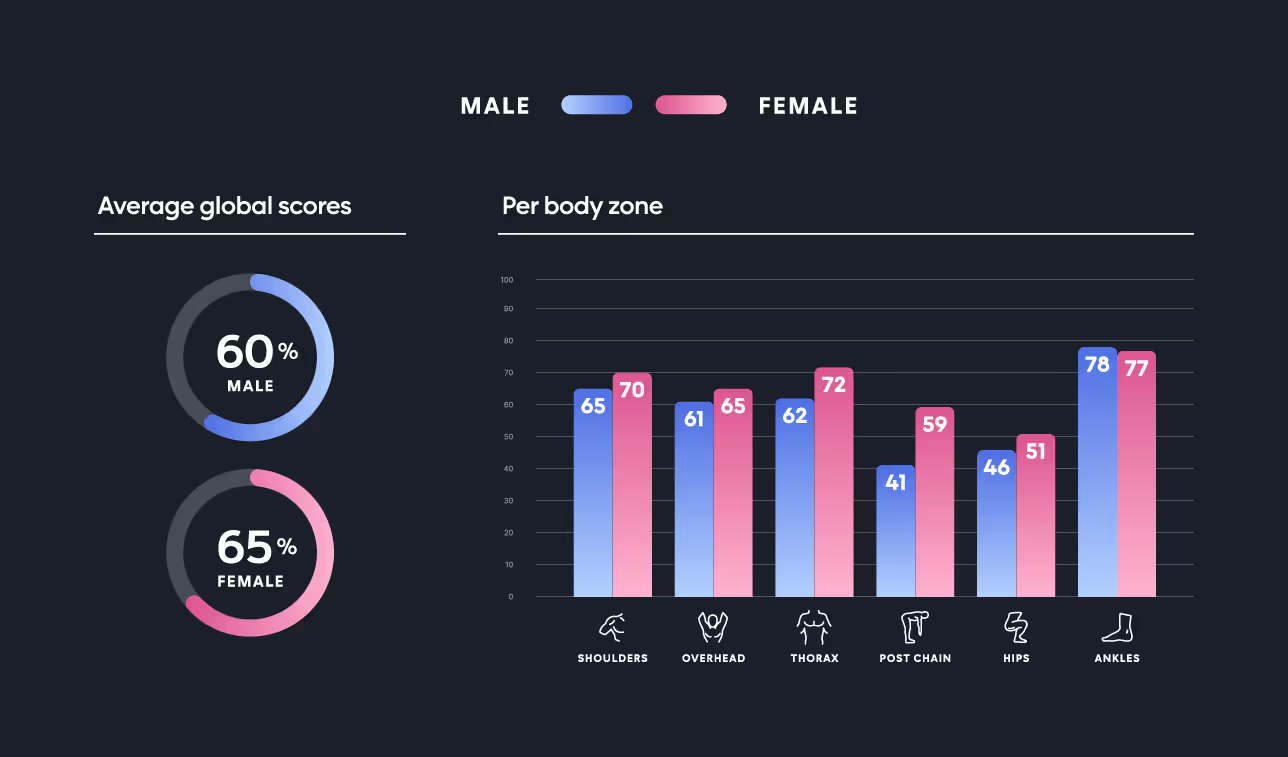
The data presented is based on a panel of 27,686 users of the GOWOD app who completed their mobility test between March - October, 2025.
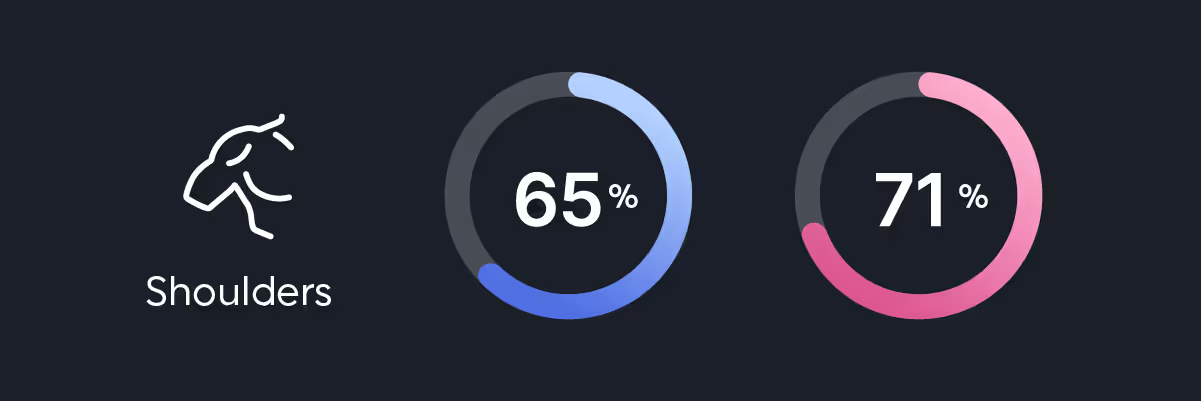
Based on our study, women do have more flexible shoulders than men, scoring an average mobility score of 71% compared to 65% for men.
Shoulder mobility underpins overhead strength, pressing mechanics, handstands, swimming strokes, and any movement that requires stable control across a large range of motion. When the shoulder moves well, the joint can stay better aligned under load, which may reduce unnecessary strain on the upper back, neck, elbows, and rotator cuff.
In daily life, good shoulder mobility supports tasks such as reaching overhead, lifting or carrying objects, dressing, and bracing during sudden movements or slips. When mobility is limited, people often compensate in the neck or upper back, which can lead to increased stiffness or discomfort over time.
Our results show that women do, on average, have better overhead mobility, scoring 65% VS 61% in men.
.avif)
Overhead mobility influences how safely and efficiently someone can press overhead, lock out a barbell, stabilize weight under fatigue, or maintain streamlined positions in movements such as swimming, gymnastics, or wall-ball work. Adequate overhead mobility allows the shoulders and upper back to share load appropriately, which may reduce compensations through the lower back or elbows.
In daily life, overhead mobility supports routine tasks such as reaching high shelves, lifting objects into cupboards, hanging washing, or performing DIY activities. When this mobility is restricted, people often arch through the lower back or elevate the ribs to create extra range which can contribute to discomfort or inefficient movement patterns over time.
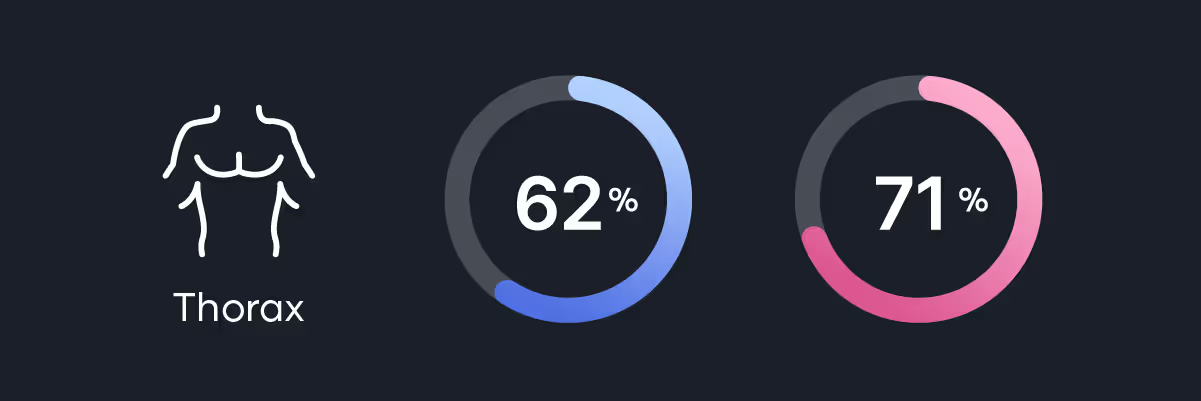
Based on our study, women exhibit greater thoracic mobility, scoring an average of 71% compared to 62% in men.
Thoracic mobility plays a central role in many athletic movements, particularly those involving rotation. In sports such as golf, tennis, swimming, the thoracic spine needs to rotate and extend efficiently so that the shoulders and hips can move without excessive strain. When mobility here is limited, the body often compensates through the lower back or shoulders, which may increase the load on joints that are not designed to handle that range of motion repeatedly.
In daily life, good thoracic mobility supports comfortable breathing mechanics, upright posture, the ability to turn or look over the shoulder, and tasks that require reaching or lifting in front of the body. Stiffness through the upper spine can make simple movements feel restricted, contribute to neck tension, or encourage slouched postures that increase fatigue over the course of a day.
Women scored 60%, while men scored 42%, the lowest score for men across all body zones.
.avif)
Postchain mobility, which includes the hamstrings, glutes and lower back, is fundamental for efficient movement in sport and training. It directly influences hip hinging, deadlifting mechanics, running stride length and the ability to generate force without overloading the spine. When postchain mobility is limited, athletes often compensate by rounding through the lower back or shortening their stride. This may increase mechanical stress and reduce movement efficiency.
In everyday life, postchain flexibility supports bending to pick objects up, getting in and out of chairs, walking comfortably and maintaining an upright posture during prolonged standing. Restrictions in this area can make daily movements feel stiff or effortful and may contribute to recurring lower back tightness or discomfort.
On average, women scored 54% making it their lowest-scoring body zone in the assessment, but still greater than the 47% scored by men.
.avif)
Hip mobility is crucial for many athletic movements, particularly those that rely on squatting depth, running efficiency and stride mechanics. Adequate mobility allows the hips to move through their full range without shifting excessive load to the knees or lower back. These compensations can reduce performance quality and increase the risk of irritation or strain over time.
In daily life, hip mobility supports sitting and standing with ease, walking comfortably, climbing stairs, getting in and out of cars and maintaining balanced posture during prolonged activities. Restrictions in this area can make these movements feel stiff or restricted and may contribute to discomfort in surrounding joints
Ankle mobility is the only body zone where men scored above women, at 78% VS 76%.
.avif)
Ankle mobility plays a major role in sport and training, particularly in movements that require effective force transfer through the lower body. It influences squatting mechanics, running gait, jumping capacity and the ability to land or change direction with control. When ankle mobility is limited, athletes often compensate by lifting the heels, shifting weight excessively to one side or collapsing through the arches. These patterns can reduce performance efficiency and increase stress on the Achilles, knees or lower back.
In everyday life, ankle mobility supports comfortable walking, stair climbing, balance, and the ability to crouch or rise from the floor without strain. Restrictions in this area can lead to shorter steps, reduced stability and increased reliance on other joints for basic movements.
Take our FREE mobility and flexibility test to identify your strengths and areas for improvement. In minutes, get a detailed breakdown of each body zone with insights and personalized guidance to progress.
Below is a detailed comparison of mobility scores between the different genders at different age brackets. Each group has been scored on their shoulder, overhead, thorax, postchain, hip and ankle mobility, along with an overall average mobility score.
.avif)
Women aged 18-33 demonstrate higher mobility in every category. The most notable differences appear in the postchain (+14%) and thorax (+10%), suggesting earlier advantages in hamstring and upper-spine mobility. Ankles are almost equal in this group, with men just 1% behind women.
Women aged 34-45 continue to outperform men in every category except ankles, where men (81%) score slightly higher than women (78%).
Compared to the 18-33 group:
Women aged 46-55 again score higher across all categories except ankles. Key changes compared with earlier age groups include:
In the 56-65 age group, women continue to score higher in all categories except ankles. Key observations:
Across all age groups, women consistently outperform men in:
Men lead only in ankle mobility, and the difference is negligible.
Both groups see gradual reductions across most bodyzones as age increases. Declines are most notable in:
However, thoracic mobility remains relatively stable for women compared with men.
In every age group, men score lowest in postchain mobility, often by a large margin. This aligns with clinical observations where tighter hamstrings and lumbar tension commonly present in male athletes.
What do the mobility percentage scores mean?
Our app includes a free mobility assessment that scores your body based on your ability to perform certain movements. Your score is a percentage of optimization for a particular category. For example, a 100% mobility score means you have full range of motion from a physiology standpoint.
Why might women be more flexible than men overall?
Research suggests that hormonal, structural, and connective tissue differences may contribute to women showing greater baseline flexibility. Factors such as joint laxity, pelvic structure, and movement patterns may also influence mobility scores. However, individual training history and lifestyle tend to have a much greater impact than sex alone.
Does training experience affect the flexibility differences between women and men?
Yes. Mobility is highly responsive to training, regardless of sex. Athletes who routinely incorporate mobility work often show significantly higher scores than sedentary individuals. The differences seen in the dataset likely reflect both anatomical tendencies and the types of training commonly performed within each group.
Do these results mean women will always be more flexible than men?
No. These findings represent averages across a large dataset, not fixed biological rules. Many men score higher than the female average, and many women score lower. Mobility is adaptable at any age and can improve with targeted work.
How much does age influence overall flexibility?
The data shows a gradual decline in mobility scores across the lifespan for both women and men. Shoulder, overhead, and hip mobility tend to show the most noticeable reductions with age, while thoracic mobility remains more stable in comparison. Regular mobility work may help slow this decline.
Can men match or exceed women’s mobility with training?
Absolutely. While the dataset shows trend differences, mobility is highly trainable. Men who consistently work on hamstrings, hips, and thoracic rotation often close the gap quickly and may outperform the average female score in several areas.
Why is postchain mobility so much lower for men across every age group?
This trend aligns with well-documented differences in tissue stiffness, lifestyle patterns (such as lower-body loading and sitting duration), and training history. Hamstring tension, lumbar tightness, and reduced hip hinge mobility often present more frequently in male athletes. These factors may contribute to the consistently lower postchain scores.
How should readers use this information?
These results provide a snapshot of mobility trends and may help individuals identify common strengths and limitations. They should not be viewed as fixed benchmarks but as context to guide better training decisions, improve range of motion, and support long-term movement health.
You’re only 3 steps away from unlocking your full potential.