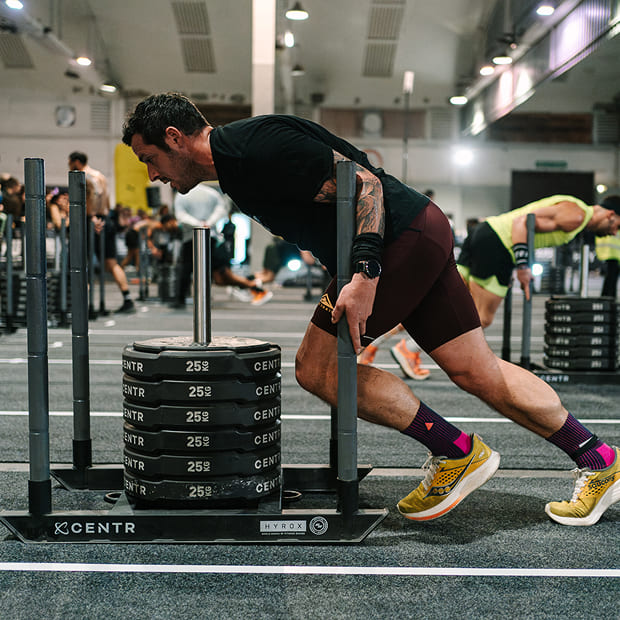
Trail running is not just a sport. It is a way of experiencing the outdoors that rewards preparation, curiosity, and physical resilience in equal measure. Whether you are running your first mountain trail or preparing for an ultramarathon, the demands of off-road running are unlike anything a road or track can replicate. Uneven terrain, elevation, technical descents, and the sheer variety of conditions that trail running presents require a different kind of preparation than most running apps are built for.
In this guide, we compare five of the most useful apps for trail runners: Strava, Garmin Connect, Komoot, TrailForks, and GOWOD. From route planning and navigation to performance tracking and the mobility work that keeps the body moving well on technical terrain, here is a breakdown of what each one offers and how they work together across your trail running.
The best apps for trail running depend on what you need most from your preparation, but most trail runners benefit from combining multiple tools:
Together, these tools help trail runners explore more confidently, perform more consistently, and keep the body ready for whatever the trail throws at them.
Trail running apps serve very different purposes. Some are built around navigation and route discovery. Others focus on performance tracking, data analysis, or the community that makes trail running such a connected sport.
This is why most serious trail runners use multiple platforms rather than rely on a single one. For example, a runner may use:
The comparison above breaks down how each app fits into this system, helping you understand which tools are most relevant to how you run and how they can work together to support your trail running.
App Store rating: 4.8★
Strava is the platform most trail runners already use, and for good reason. Its GPS tracking, community features, and performance data make it one of the most versatile tools for logging and sharing the runs that trail running produces, from a quick morning singletrack session to a full day in the mountains.
Every run is recorded with GPS tracking, capturing pace, distance, elevation gain, and route maps. For trail runners, the elevation data is particularly valuable, providing a clear picture of cumulative ascent and descent across a training block and helping athletes understand the true demands of their sessions beyond simple pace and distance.
The segment system translates naturally to trail running. Familiar climbs, technical descents, and popular trail sections all become segments where runners can compare their efforts over time and compete with the wider community. Clubs, challenges, and social features keep motivation high across long training blocks and connect trail runners to a community that shares their enthusiasm for off-road running.
Key features
Best for
Trail runners who want a detailed record of every run, elevation and performance data that goes beyond basic tracking, and the motivation of a highly active outdoor running community.
Strava captures something deeply meaningful to trail runners: the visibility of their work. A 2,000 metre elevation day in the mountains deserves to be logged, shared, and celebrated, and Strava does that better than any other platform. We love that it makes the most demanding days in the hills feel like the achievements they genuinely are.
{{strava-cta="/components"}}
App Store rating: 4.4★
Garmin Connect is the performance platform behind the GPS watches most serious trail runners already wear, and for athletes who want the deepest possible insight into how their bodies are performing and recovering across demanding off-road terrain, it is an essential tool.
The platform captures advanced metrics that go well beyond pace and distance. Elevation data, running dynamics, ground contact time, vertical oscillation, and stride length all give trail runners a detailed picture of movement efficiency across varied terrain. Training load and recovery time tools help athletes manage the physical demands of trail running intelligently, particularly important during high-volume weeks or when back-to-back days in the mountains are part of the plan.
Daily readiness and body battery scores incorporate sleep, heart rate variability, and activity data to provide a holistic picture of the body's readiness for the demands ahead. For trail runners pushing into longer distances or more technical terrain, this kind of recovery intelligence is genuinely valuable.
Offline maps and course navigation tools mean Garmin Connect extends naturally beyond the training log into the trail itself, supporting athletes in unfamiliar terrain where mobile signal cannot be relied upon.
Key features
Best for
Data-driven trail runners using Garmin devices who want comprehensive performance and recovery insight across technical terrain and high-volume off-road training.
Trail running places demands on the body that road running data simply does not capture, and Garmin Connect understands that. The elevation data, the running dynamics, the recovery intelligence across back-to-back mountain days: these are the metrics that actually matter when you are training seriously for off-road performance. We respect any platform that treats the complexity of trail running with the depth it deserves.
App Store rating: 4.8★
Komoot is the go-to route-planning and navigation app for trail runners, and it has built its reputation on the quality of its mapping, the accuracy of its terrain data, and the depth of community knowledge that underpins every route in its database.
The app allows runners to plan routes using detailed maps that show surface type, terrain difficulty, and elevation profile before taking a step. This is particularly valuable for trail runners exploring unfamiliar areas, where understanding what lies ahead in terms of technical difficulty, elevation, and surface conditions can make the difference between a great run and a dangerous one.
Turn-by-turn navigation guides runners through planned routes without requiring constant phone checking, and offline map downloads mean the app remains functional in remote areas without a mobile signal. The route discovery system draws on a large community of outdoor enthusiasts who share routes with photos, terrain notes, and local knowledge, making Komoot as useful for finding new trails as it is for planning them.
Key features
Best for
Trail runners who want to plan, discover, and navigate off-road routes with confidence, particularly in unfamiliar terrain where accurate mapping and reliable navigation are essential.
Komoot reflects what trail running is really about: the joy of exploring terrain you have never run before, with the confidence that comes from knowing exactly what lies ahead. The quality of the mapping, the depth of the community knowledge, and the reliability of the navigation in remote areas make it one of the most genuinely useful tools a trail runner can have. We love that it makes the world's trails accessible to every runner, regardless of experience.
App Store rating: 4.7★
TrailForks is the most comprehensive trail database available and has become an essential resource for trail runners who want accurate, up-to-date information about the trails they are running or planning to run. Originally built for mountain biking, its trail data and community reporting system translate directly to trail running, making it one of the most reliable sources of trail conditions and route information.
The app gives access to an enormous global database of trails with detailed information on difficulty, surface type, elevation, and current conditions. Community reporting means conditions are updated regularly by local users, giving runners accurate information about trail status before heading out, particularly valuable after rain, in winter conditions, or in areas where trail quality varies significantly by season.
Route planning tools allow runners to build routes from the trail database, combining multiple trails into longer runs with full elevation and difficulty profiles. The community features connect trail runners with local knowledge and recommendations that no automated mapping system can replicate.
Key features
Best for
Trail runners who want the most accurate and up-to-date trail information available, particularly those exploring new areas or running in conditions where trail quality and current status matter.
TrailForks brings something no mapping algorithm can provide: the real-time, on-the-ground knowledge of the people who run these trails every week. The community reporting system, the conditions updates, and the depth of local knowledge embedded in the database make it genuinely trustworthy in a way that automated trail data often is not. For trail runners who care about what the trail is actually like before they get there, TrailForks is invaluable.
App Store rating: 4.8 ★
GOWOD is the leading mobility training platform for athletes, and for trail runners, it addresses a preparation dimension that no other app in this comparison covers. Trail running places unique and varied demands on the body. Uneven terrain requires constant micro-adjustments in ankle, knee, and hip position. Technical descents load the quadriceps, hip flexors, and ankles under eccentric stress that flat running never replicates. Elevation gain demands hip extension and calf capacity across sustained climbs. And the sheer variety of surfaces and gradients that trail running presents means the body needs a broader range of controlled movement than road running ever requires.
GOWOD begins with a comprehensive mobility assessment that identifies each runner's individual restrictions and builds a personalized program around them. Pre-run routines prepare the ankles, hips, and calves for the specific demands of the terrain ahead. Post-run routines restore range of motion in the areas under the most stress, particularly the quadriceps, hip flexors, and calves that absorb the most load on technical descents and long climbs. On rest days, targeted mobility work maintains joint health across the full demands of a trail running training block.
Sessions are time-efficient, require no equipment, and can be completed anywhere, making it practical to build mobility into a training routine, whether you are at home or away on a trail running trip.
Key features
Best for
Trail runners at any level who want to move more confidently on technical terrain, recover more effectively after demanding runs, and protect the joints and muscles that off-road running places under the greatest stress.
See what’s holding your running back. GOWOD analyzes your mobility and gives you daily routines tailored to how your body moves, so you can improve over time.
Road running is repetitive by nature. Trail running is anything but. Every step on technical terrain requires the body to adapt to different surfaces, gradients, and foot placements. That constant variation is what makes trail running so rewarding, and what makes mobility so important for anyone who runs it seriously.
The ankle is the first point of contact with uneven terrain and the joint under the greatest demand on technical trails. Adequate ankle dorsiflexion and rotational control allow the foot to adapt to changes in surface without the ankle rolling or the load transferring abruptly up the chain to the knee and hip. When ankle mobility is restricted, that adaptability is reduced, and the risk of acute ankle injury on technical terrain rises significantly.
The hips absorb the eccentric load of descents and drive the extension needed for sustained climbing. Hip flexor tightness, common in runners who also spend time sitting, limits extension at push-off and reduces the efficiency of both climbing and flat running mechanics. Restricted hip external rotation limits the body's ability to adapt to lateral changes in foot placement, which occur constantly on technical trails.
The quadriceps and calves are the primary shock absorbers during technical descents, working eccentrically to control the descent rate and protect the knees from impact. When these muscle groups lack adequate length and control, the knees absorb more direct impact load, and the familiar quadriceps soreness that follows a long descent becomes a structural concern rather than simply a training effect.
The table below maps the key mobility demands of trail running by terrain type, showing the consequences of restrictions and how GOWOD addresses each.
GOWOD's personalized assessment identifies which of these areas is most limiting for each individual runner, and the targeted routines build the range and control needed to move confidently and efficiently across whatever terrain the trail presents.
Trail running training works best when it is built around variety rather than volume alone. The apps you use across the week play a significant role in how well that variety is managed, how progress is tracked, and how the body is prepared and recovered between sessions.
Log every run with Strava or Garmin Connect. Consistent session logging is the foundation of structured training. Recording pace, distance, and elevation across every run builds the data needed to understand how training load is developing week by week. Garmin Connect's training load and recovery time tools are particularly useful for trail runners managing back-to-back days on demanding terrain, giving a clear picture of when to push and when to hold back.
Plan sessions in advance with Komoot or TrailForks. Knowing the terrain, elevation, and technical demands of a planned run before heading out allows you to prepare appropriately and choose routes that align with that day's training goal. An easy aerobic day calls for gentle, runnable trails. A climbing session calls for sustained ascent. Komoot and TrailForks make it straightforward to find and plan routes that serve each training purpose.
Use GOWOD every day. Trail running places varied and unpredictable demands on the ankles, hips, calves, and quadriceps. Pre-run GOWOD routines prepare those areas for the specific terrain ahead. Post-run routines restore range of motion after demanding sessions, particularly after technical descents and long climbs. On rest days, targeted mobility sessions address the deeper restrictions that accumulate across a training block and maintain the joint health that consistent trail running demands.
Rest days (one to two per week). Full rest days are not optional in trail running training. The demands that technical terrain and eccentric loading place on connective tissue require genuine recovery time. Rest days combined with a GOWOD mobility session allow the body to fully recover without losing the movement quality built through training.
Trail running is one of the most physically demanding forms of running, and its injury profile reflects that. The combination of uneven terrain, significant elevation change, and high eccentric loading on descents creates risks that road running rarely replicates. The apps you use in training play a direct role in managing those risks.
Manage training load with Garmin Connect. Overuse injuries are most commonly the result of training load increasing faster than the body can adapt. Garmin Connect's training load and recovery time tools give trail runners a data-driven way to manage this, flagging when accumulated stress is rising to levels that increase injury risk. Using this data to inform recovery decisions is one of the most effective ways to stay healthy across a demanding training block.
Plan terrain progressively with Komoot and TrailForks. Introducing technical terrain, significant elevation, and long descents too quickly is a common cause of acute and overuse injury in trail runners. Using Komoot and TrailForks to plan routes that gradually introduce these demands, rather than jumping straight into the most challenging terrain, gives the body time to adapt to the specific stresses of off-road running.
Use GOWOD to address the mobility restrictions that drive injury risk. Most trail running injuries are connected to restrictions in ankle, hip, or quadriceps mobility that reduce the body's ability to absorb and control load on technical terrain. GOWOD's personalized assessment identifies these restrictions and builds targeted routines to address them progressively, expanding the body's capacity to handle the demands of trail running before they exceed the tissue's capacity to absorb them.
The table below maps the most common trail running injuries, their causes, and how GOWOD reduces the risk.
The thread running through all of these injuries is consistent: they occur most commonly when the demands placed on the body exceed its capacity to meet them. Building and maintaining mobility with GOWOD expands that capacity, keeping the body resilient enough to handle the demands of trail running, session after session.
Signing up for your first trail race is one of the most exciting decisions a runner can make, and one that requires a different kind of preparation than most road runners expect. The right apps make that preparation significantly more structured, informed, and effective.
Research the course with Komoot or TrailForks
Before building a training plan, use Komoot or TrailForks to research the course profile, terrain type, and technical difficulty. Understanding the elevation gain, surface conditions, and technical demands of the race shapes every subsequent training decision. Many trail races offer their routes for download directly into navigation apps, allowing you to train on similar terrain or even sections of the course itself in the weeks before race day.
Track your elevation training with Garmin Connect or Strava
If your goal race includes significant climbing, your training needs to include significant climbing. Use Garmin Connect or Strava to monitor cumulative elevation throughout your training block and ensure climbing volume builds progressively week by week. The data makes it easy to see whether elevation training is on track and where additional vertical work is needed before race day.
Monitor training load carefully in the final weeks with Garmin Connect
The two weeks before race day should include a structured reduction in training volume while maintaining some intensity. Garmin Connect's training load and body battery tools help trail runners manage this taper intelligently, arriving at the start line fresh rather than carrying accumulated fatigue from training too hard in the final block.
Prepare the body with GOWOD
In the weeks before your first trail race, GOWOD's pre-run mobility routines become an essential part of race preparation. The ankles, hips, and calves need to be prepared for the full range of terrain the race will present, from the first technical section to the final descent. A thorough pre-race mobility session on the morning of the event prepares the joints and muscles for the demands they will face under race conditions and over a distance that may be longer than anything trained for.
Post-race, GOWOD's recovery routines support the restoration of range of motion in the areas under the greatest stress, helping the body recover more completely from the demands of a first trail race. For targeted exercises to incorporate into your preparation, GOWOD's guide to the 5 stretches every trail runner should know is a good place to start.
What is the best app for trail running?
The best app depends on what you need most. Komoot and TrailForks are the strongest choices for route planning, navigation, and trail discovery. Garmin Connect provides the deepest performance and recovery data for athletes using Garmin devices. Strava is the best option for logging runs and staying connected to a trail running community. And GOWOD addresses the mobility and recovery demands that other apps overlook, helping trail runners move more confidently on technical terrain and recover more effectively between demanding sessions.
Do I need a navigation app for trail running?
For familiar, well-marked trails, a navigation app is not essential. For exploring new areas, running in remote terrain, or tackling technical routes where getting lost is a genuine risk, a dedicated navigation app such as Komoot is strongly recommended. The ability to plan a route in advance, follow turn-by-turn navigation, and access offline maps without a mobile signal makes a significant difference to both safety and enjoyment on unfamiliar trails.
How do I use apps to prepare for a trail race?
Start by researching the course on Komoot or TrailForks to understand the terrain and elevation demands. Use Garmin Connect or Strava to track elevation training across your build and ensure climbing volume is progressing appropriately. Monitor training load with Garmin Connect in the final weeks to manage the taper intelligently. And use GOWOD throughout the training block and on race morning to prepare the body for the specific demands of the course.
How does GOWOD support trail running performance?
GOWOD addresses the specific mobility demands placed on the ankles, hips, calves, and quadriceps by trail running. The personalized assessment identifies the areas most restricted for each individual runner, and the targeted routines address those restrictions before, after, and on rest days. For trail runners specifically, GOWOD's pre-run routines prepare the body for the varied demands of off-road terrain, while post-run routines target the areas under the greatest stress after technical descents and long climbs.
Can apps help prevent trail running injuries?
Yes. Garmin Connect's training load tools help runners manage volume intelligently and avoid the overuse injuries that result from increasing demands too quickly. Komoot and TrailForks support progressive terrain introduction, reducing the risk of acute injuries from technical surfaces the body is not yet prepared for. And GOWOD addresses the mobility restrictions that drive the most common trail running injuries, building the range and control the body needs to handle demanding terrain consistently and safely.
The trail does not care how fit you are if your body cannot move freely through it. Download GOWOD today and build the mobility that makes every run safer, stronger, and more enjoyable.
You’re only 3 steps away from unlocking your full potential.