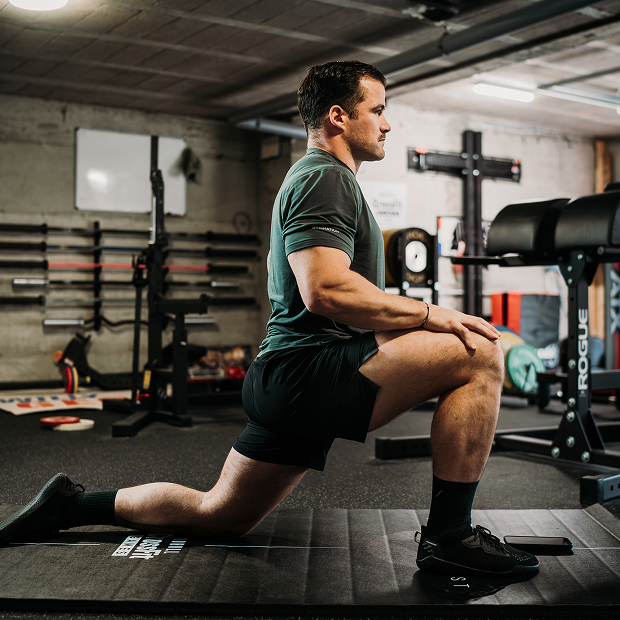
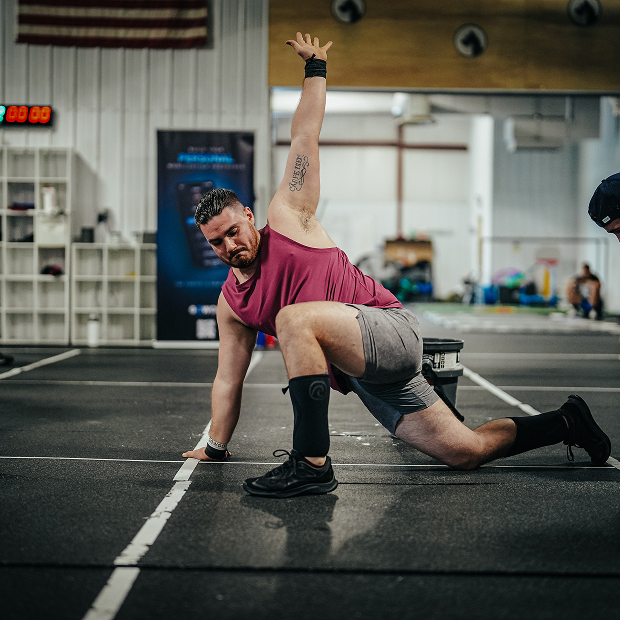
CrossFit can be an excellent training style for weight loss because it combines heavy strength work with high-intensity conditioning in the same session. You load multiple joints through full ranges of motion, recruit large muscle groups, and elevate your heart rate repeatedly. From an energy expenditure and muscle-preservation standpoint, that combination is effective.
However, CrossFit does not cause fat loss in isolation. Weight loss still depends on a consistent calorie deficit, supported by nutrition, recovery, and the ability to train regularly. Where CrossFit tends to work well is adherence. Structured programming, coaching, and community make many people more likely to show up week after week. And physiologically, that repeated exposure to progressive loading is what drives changes in muscle mass, work capacity, and ultimately body composition.
CrossFit can support weight loss, but it is rarely enough on its own. Fat loss is driven by energy balance; while CrossFit increases energy expenditure, it does not automatically create a sustained caloric deficit without attention to nutrition and recovery.
To lose body fat, the body must consistently use more energy than it takes in. This can be achieved through reduced calorie intake, increased physical activity, or a combination of both.
CrossFit contributes to this by increasing daily energy expenditure; however, training alone often does not offset high or inconsistent caloric intake. This is why people can train regularly yet still struggle to lose weight when their nutrition is not aligned with their goals.
Lean muscle tissue plays an important role in metabolic health. Maintaining muscle during weight loss helps support resting metabolic rate, meaning the body uses more energy at rest than with lower muscle mass.
Because CrossFit includes regular strength training, it can help preserve or build lean muscle compared to cardio-only approaches. This supports better body composition outcomes and can make weight loss more sustainable over time.
Hard training does not always translate directly into fat loss. High-intensity exercise can influence appetite, hunger levels, and daily activity patterns in different ways.
Some people experience reduced appetite after intense sessions, while others compensate later in the day by eating more. Fatigue can also reduce non-exercise movement, such as walking or general activity, which can offset calories burned during workouts. These responses help explain why effort alone does not always lead to results.
Weight loss is rarely the result of a few extremely hard sessions. It comes from repeating manageable habits over weeks and months. A training approach that can be sustained without excessive soreness, injury, or burnout is far more effective than short periods of maximal effort followed by time off.
CrossFit can support consistency when workouts are scaled appropriately, and recovery is prioritised.
Mobility exercises play a direct role in how effectively someone can train for weight loss with CrossFit.
CrossFit involves repeated squatting, pressing, hinging, and overhead work, all of which place demands on joint range and control. When mobility is limited, technique breaks down, movement becomes less efficient, and joint stress increases. This often leads to discomfort or stiffness that can interrupt training.
Improving mobility supports cleaner mechanics, faster recovery, and better tolerance to weekly training volume. It also modestly contributes to overall energy expenditure through active mobility.
GOWOD helps address joint restrictions and improve movement quality, making it easier to stay consistent and avoid the setbacks that reduce training frequency.
Sleep and stress have a meaningful impact on weight regulation. Poor sleep is associated with increased hunger and reduced recovery capacity, while chronic stress can influence food choices, appetite, and energy levels.
Because CrossFit is physically demanding, inadequate recovery can quickly reduce training frequency and overall energy. Managing sleep, stress, and recovery is integral to effective training in addition to its role in weight management.
It is also important to distinguish between weight loss and changes in body composition. CrossFit often leads to simultaneous fat loss and muscle gain, which can result in little change on the scale, especially in the early stages.
Improvements in strength, fitness, how clothes fit, and overall movement quality often provide a clearer picture of progress than body weight alone.
Exercise improves metabolic health and energy expenditure, but it does not override poor nutritional habits. Sustainable fat loss requires alignment between training, food intake, and recovery.
CrossFit helps with weight loss because it exposes the body to high mechanical and metabolic demand within the same session. You are loading joints through full ranges of motion, recruiting large muscle groups, and repeatedly elevating your heart rate under fatigue.
That combination matters. Multi-joint movements such as squats and Olympic lifts require coordinated control of the hips, knees, ankles, shoulders, and spine. The more muscle mass involved, the greater the overall energy requirement per session.
Unlike programs that separate strength and cardio, CrossFit integrates them. Strength work preserves or builds lean tissue. Conditioning increases caloric expenditure. Together, they support fat loss while maintaining muscle, which is critical for long-term metabolic health.
When we look at research on CrossFit and high-intensity functional training, we see patterns rather than guarantees.
One important theme across the literature is variability. Some individuals respond very well. Others plateau quickly. In most cases, differences are explained by recovery quality, nutritional intake, and the ability to tolerate training volume without interruption.
CrossFit may be appropriate for beginners when scaled and coached appropriately.
For beginners, progress is often driven more by consistency and learning than by intensity.
Take our FREE mobility and flexibility test to identify your strengths and areas for improvement. In minutes, get a detailed breakdown of each body zone with insights and personalized guidance to progress.
CrossFit places broad physical demands on the body, which can be both beneficial and challenging.
When mobility or stability is limited, fatigue can reduce movement quality and increase compensations. Recovery and mobility work become essential for maintaining weekly training volume.
Most plateaus in CrossFit-driven weight loss are not caused by lack of effort. They are caused by fatigue mismanagement, joint limitations, or nutritional mismatch.
Managing intensity and prioritizing movement quality often leads to better long-term results.
Mobility is not separate from weight loss in CrossFit. It directly affects how much quality training someone can tolerate each week.
CrossFit repeatedly loads deep squat positions, overhead holds and presses, hip hinging, and trunk rotation under fatigue. Limited ankle dorsiflexion alters squat mechanics. Restricted thoracic extension affects overhead stability. Reduced hip internal rotation increases lumbar stress during pulling and rotational movements.
When joint range is limited, the body compensates. Compensation increases local tissue stress and energy cost. Over time, this can lead to joint irritation, recurrent tightness, or overload symptoms that interrupt training.
Interrupted training reduces weekly energy expenditure. It reduces strength progression. It reduces conditioning volume. And that ultimately slows fat loss.
Mobility work improves access to joint positions required in CrossFit. Better range allows cleaner movement, more efficient force transfer, and reduced unnecessary muscular tension. This often results in:
Mobility training also increases circulation and low-level energy expenditure, contributing modestly to daily caloric output while supporting tissue recovery.
For athletes using CrossFit to lose weight, mobility is not optional. It is part of maintaining training continuity.
This is where GOWOD becomes relevant. Personalized mobility programming targets the joints most stressed by your training, helping you recover between sessions and maintain consistent training volume over months, not just weeks.
Weight loss can be supported by various training approaches, each with distinct demands.
Each style places different demands on hips, shoulders, and ankles. Mobility limitations can influence comfort, technique, and total work output regardless of the training method.
{{strava-cta="/components"}}
GOWOD supports weight-loss-focused training by addressing one of the most common limiting factors, movement quality.
By improving how the body moves and recovers, GOWOD helps athletes train more comfortably and consistently.
Is CrossFit effective for weight loss?
CrossFit can be effective for weight loss when combined with appropriate nutrition, scaling, and consistency. Results vary based on training frequency and recovery.
How often should I do CrossFit if my goal is fat loss?
Most people see benefits with three to five sessions per week, depending on recovery, stress, and overall activity levels.
Do I need to be fit before starting CrossFit for weight loss?
No. CrossFit is designed to be scalable, but learning proper movement patterns and addressing mobility early is important.
Is CrossFit better than steady-state cardio for fat loss?
Neither is universally better. CrossFit combines strength and conditioning, while steady-state cardio can increase total weekly activity. Many people benefit from a mix of both.
How does mobility help with weight-loss-focused training?
Mobility improves efficiency, reduces fatigue from compensations, and supports recovery, all of which help maintain training consistency.
Can CrossFit be adapted for people with limited mobility or higher body weight?
Yes. Movements can be modified, loads adjusted, and ranges of motion scaled to individual needs.
How long does it typically take to see changes in body composition?
Many people notice changes within several weeks, but meaningful, sustainable changes typically occur over months of consistent training and nutrition.
You’re only 3 steps away from unlocking your full potential.