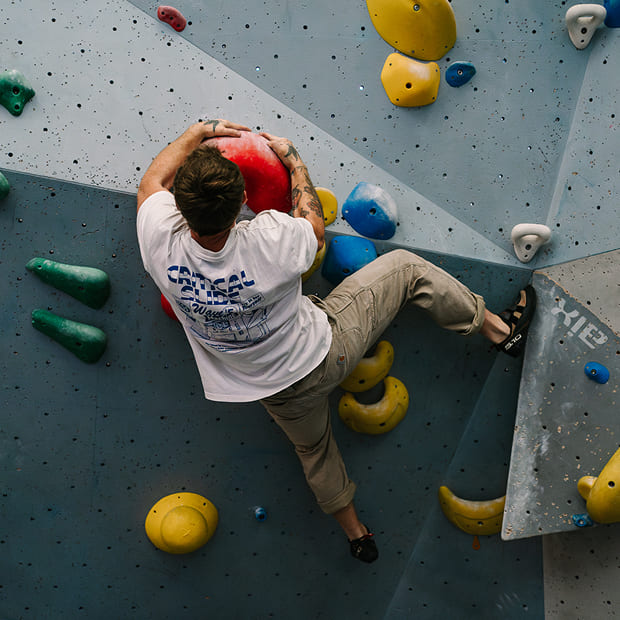
Bouldering has become one of the most popular ways to get into climbing, and it's easy to see why. It's climbing stripped down to its most approachable form: no rope, no harness, no partner required to belay you, just a wall, thick crash mats, and short sequences of holds called problems, graded from genuinely easy to extremely difficult. Indoor bouldering gyms have opened in most major cities over the past decade, climbing became an Olympic sport in 2021, and a growing number of first-time climbers are walking into a gym with zero experience and figuring it out from there.
That accessibility is part of the appeal, but it also means a lot of beginners pick up bad habits or minor injuries, simply because nobody explained the basics first. If you've never climbed before, here's what to actually expect at your first session, the gear worth having, and how to progress in a way that builds a real foundation rather than plateauing early or getting sidelined by an overuse injury a few months in.
Most people start at an indoor bouldering gym rather than outdoors, and for good reason: the walls are padded with thick crash mats, the holds are clearly marked by color or tape to indicate difficulty, and staff are usually on hand to explain how grading works. Bouldering problems are typically graded on the V-scale in the US (V0 upward) or the Fontainebleau scale in Europe (4 upward), with lower numbers being easier. Most gyms have a solid range of beginner problems, so you won't be expected to attempt anything remotely difficult on day one.
You don't need a partner, since there's no belaying involved, though climbing with others is a great way to learn technique faster and stay motivated. Sessions are also naturally more stop-start than other workouts: you climb a short problem, rest, and try again or move to a new one, rather than working continuously.
One of the reasons bouldering is such an easy sport to try is that it asks almost nothing of you upfront. Almost every gym rents climbing shoes and chalk for a small fee, so you can walk in with nothing but comfortable clothes and try a full session before spending a cent on gear.
It's worth doing this for at least your first few visits rather than buying anything straight away, both to make sure you actually enjoy it and to get a feel for what fit and style of shoe suits you, since that's a much easier decision once you've climbed a handful of times. If you find you enjoy it and want your own gear, here's what's actually worth buying and what to look for:
You generally won't need a crash pad of your own unless you move to outdoor bouldering, since indoor gyms have permanent, thick matting built into the floor.
Bouldering asks your wrists, shoulders, hips, and ankles to work hard from the very first move of a session, often on small holds or in awkward positions your body hasn't had a chance to prepare for. That makes a proper warm-up more important here than in a lot of other sports, and it's about more than just breaking a light sweat.
Before you start:
After a session:
Consistency with a warm-up and cool-down routine matters more than the specific moves you pick, so it's worth finding a handful that fit your session rather than treating this list as the only option. If you want a wider variety of warm-up and cool-down moves to draw from beyond what's listed here, our mobility exercises library is a good place to browse.
Bouldering rewards technique far more than raw strength, especially early on. It's common to see a strong gym-goer struggle on a problem that a smaller, less muscular climber moves through easily, simply because the smaller climber is using their feet, hips, and body position to do the work that the stronger climber is trying to muscle through with their arms. This is genuinely good news if you're starting from zero: the skills below matter more than how many pull-ups you can do, and building them properly now creates a foundation that keeps paying off as the problems get harder and strength alone stops being enough to compensate.
Ask a staff member or experienced climber to show you how to fall safely onto the mats (bending your knees, avoiding sticking an arm out to catch yourself) before you start climbing more serious problems. This is one of the more overlooked basics, and getting it right early reduces your risk of a wrist or ankle injury from an awkward landing.
New climbers tend to rely heavily on arm strength, since it's the most obvious way to move upward. Deliberately focusing on where you place your feet and trusting your legs to do more of the work is what separates climbers who progress quickly from those who plateau early.
Bouldering is a power-based activity rather than an endurance one. Short, intense efforts followed by real rest (a minute or more between attempts on a hard problem) let your forearms and grip recover enough to climb with good technique, rather than grinding through fatigued, sloppy attempts that build bad habits.
Bouldering places unusually concentrated load on your finger flexor tendons and the pulley system that keeps them close to the bone, particularly on small or crimped holds. A gradual warm-up on easy problems before attempting anything near your limit is a low-risk practice thought to help prepare these structures, along with your wrists and shoulders, for higher loads, though direct evidence on how much this reduces climbing-specific injury risk is limited. How to Prevent Elbow Pain in Bouldering covers this in more depth, since elbow and forearm overuse is one of the most common issues new climbers run into as they start climbing more often.
Jumping to harder grades too quickly, especially on small holds gripped with your fingers curled tightly (called a full crimp, where the middle finger joint is sharply flexed and the fingertip joint is hyperextended), is one of the most common ways beginners strain the tendons and pulleys in their fingers. Using a more open grip (half crimp or open hand) on small holds when you can puts less strain on those structures. Spending real time consolidating a grade before moving up gives your connective tissue, which adapts more slowly than your strength does, a chance to catch up.
A single session with an experienced climber or a beginner's class can correct habits (poor body positioning, over-gripping, not using your hips) that are much harder to unlearn once they're established. Many gyms offer an introductory class for exactly this reason.
Take our FREE mobility and flexibility test to identify your strengths and areas for improvement. In minutes, get a detailed breakdown of each body zone with insights and personalized guidance to progress.
Bouldering asks your joints to move through ranges most other sports rarely touch:
If any of these ranges are limited, your body tends to compensate in ways that either block you from reaching a hold cleanly or shift extra load onto your fingers, wrists, and shoulders instead.
Mobility isn't the same as being "flexible." Flexibility is the range a joint can reach passively, when stretched. Mobility is your ability to actively control and load a joint through that same range: flexibility is one component of mobility, not a synonym for it. A climber with limited hip mobility, for example, might substitute a high step with an early pull through the arms, adding unnecessary load onto the same fingers and forearms already working hard just to hold on.
Why this matters most for beginners:
Climbing gyms come with their own vocabulary, and it can make a first session feel more intimidating than it needs to be.
Here's what the common terms actually mean:
Do I need to be strong to start bouldering?
No. Bouldering technique, particularly footwork and body positioning, matters more than raw strength for beginner and intermediate problems. Strength becomes more relevant as you progress to harder grades.
Is bouldering actually a good workout?
Yes, though what kind of workout depends on how you approach it. Is Bouldering a Good Workout? breaks down what it does and doesn't train well compared to other forms of exercise.
How often should a beginner boulder each week?
Two to three sessions a week, with at least a day of rest in between, is a commonly recommended starting point. It gives your fingers and connective tissue time to adapt and limits the build-up of overuse strain, which is a common issue for enthusiastic beginners climbing every day early on.
Ready to climb while limiting the risk of overuse injuries?
Bouldering asks a lot of your fingers, wrists, and shoulders, often more than people expect when they're just starting out. The GOWOD app includes mobility routines built around exactly these areas, helping you warm up properly and reduce the risk of the overuse issues that catch a lot of new climbers.
Download GOWOD and build the mobility habits that keep you climbing.
You’re only 3 steps away from unlocking your full potential.