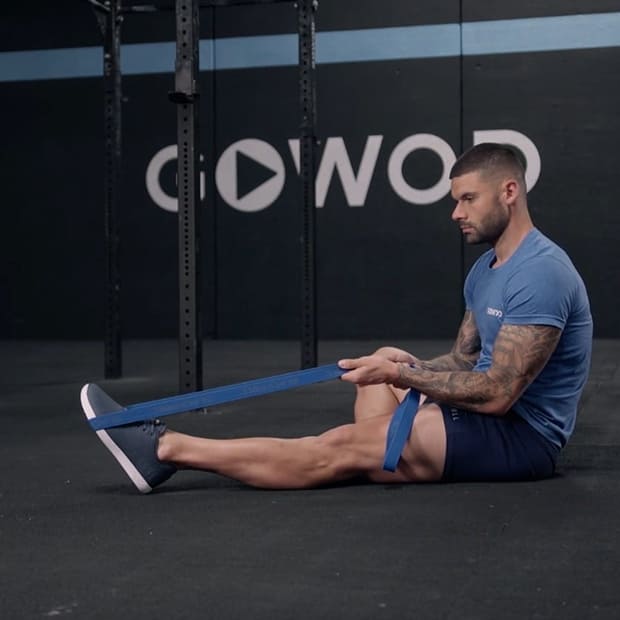
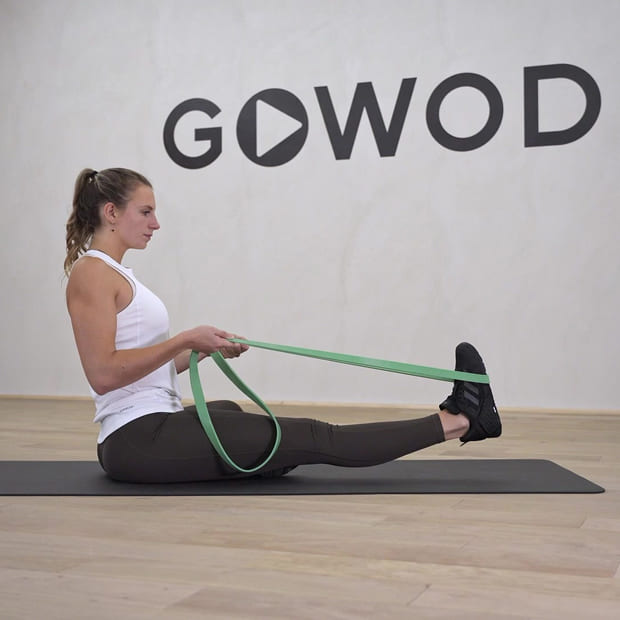
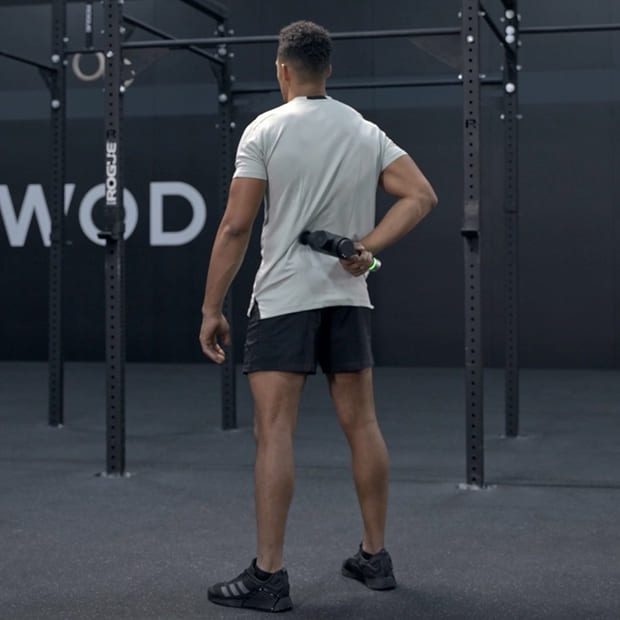
Sore glutes after step-ups are common, and the pattern reflects the specific combination of muscle work the exercise demands. Step-ups are a compound, largely unilateral movement, and EMG comparisons across single-leg exercises show that while the quadriceps (vastus lateralis and vastus medialis) typically produce the highest activation, the gluteus medius and gluteus maximus are also substantially activated (Muyor et al., 2020).
Beyond driving hip extension, the gluteus medius takes on an added stabilizing role during the single-leg stance phase of a step-up, controlling pelvic position on the unsupported side. That combination, extension force plus ongoing stabilization work, is a large part of why the glutes can feel just as worked as the quads after a step-up session.
Below, we've selected five moves to help ease that tightness and support your hips through the next session:
Take our FREE mobility and flexibility test to identify your strengths and areas for improvement. In minutes, get a detailed breakdown of each body zone with insights and personalized guidance to progress.
Glute tightness after step-ups reflects the specific combination of demands the exercise places on the hip. Electromyographic comparison of single-leg lower-body exercises, including the lateral step-up, shows that the vastus lateralis and vastus medialis muscles exhibit the highest activation, followed by the gluteus medius and gluteus maximus (Muyor et al., 2020). Beyond simple hip extension, the gluteus medius takes on an added stabilizing role throughout the single-leg stance phase of a step-up, controlling pelvic position on the unsupported side for the full duration of the movement.
Key mechanisms at play include:
This is one reason why glute tightness after step-ups is often not fully resolved by treating the glutes alone. The quadriceps, gluteus medius, and gluteus maximus share the mechanical load of the exercise, and often the resulting tightness too. If your quads are taking the brunt of it too, read our guide to leg soreness after squats for more insight.
Different structures around the hip and thigh contribute to post-step-up tightness for different reasons. Understanding these relationships helps explain why a broad routine, rather than a single stretch, is often more effective.
| Area | Common issue | Why it happens | Performance impact |
|---|---|---|---|
| Gluteus maximus | Increased muscular tension. | Produces hip-extension force during the concentric phase of each step. | Can restrict full hip extension at the top of the next rep. |
| Gluteus medius | Localized tightness and fatigue. | Sustained stabilization of the pelvis throughout the single-leg stance phase. | May reduce pelvic control and increase hip drop on the working side. |
| Vastus lateralis and vastus medialis (quadriceps) | Increased muscular tension. | Primary knee extensors, typically show the highest EMG activity of the exercise. | Can limit comfortable knee flexion depth on the next step or stair. |
| Piriformis and deep hip rotators | Secondary tightness. | Assist in controlling femoral rotation during single-leg loading. | May contribute to tightness felt at the outer hip. |
These areas do not operate independently. Reduced gluteus medius control can allow the pelvis to drop or rotate during the single-leg stance phase, which shifts additional demand onto the quadriceps and lower back to complete the same step-up pattern.
Glute tightness after step-ups is not just a comfort issue; it can also carry over into how the next session feels and how you perform.
When the glutes and stabilizing muscles remain tight and fatigued, the pelvis may not stay as controlled through the single-leg stance phase in the following session. For lifters training regularly, this may lead to:
Research on post-exercise recovery techniques suggests that structured interventions, combined with adequate rest between sessions, are associated with faster reductions in soreness, perceived fatigue, and markers of muscle damage following resistance training (Dupuy et al., 2018). Mobility work targeting the glutes and quadriceps supports this process, rather than replacing it.
A more effective approach tends to rely on consistency and targeting the muscles that carried the load, rather than simply stretching the glutes more aggressively.
A structured approach may include:
The goal is not to stretch the glutes as far as possible, but to reduce the tightness that builds up from the exercise's specific demands.
Our approach is based on individual assessment, identifying where your specific tightness and restrictions exist, whether that is the gluteus medius, gluteus maximus, or the deep hip rotators, and prioritizing those areas. By starting with a personalized assessment, you can focus on what is actually driving your glute tightness rather than following a generic routine.
If tightness is accompanied by sharp knee pain, a sense of the knee giving way, significant swelling, or hip pain with mechanical catching or locking, this warrants medical evaluation rather than stretching, as these can indicate an issue mobility work does not address.
Separately, pigeon, the seated piriformis stretch, and 90 to 90 all involve deep hip flexion combined with external or internal rotation. If you have a history of hip labral issues, femoroacetabular impingement, or sciatic nerve symptoms (pain, tingling, or numbness radiating down the leg), these positions can aggravate symptoms, so ease into the range of motion gradually and stop if you feel anything beyond a normal stretch sensation.
Is it normal for your glutes to be really sore after step-ups?
Yes. Step-ups place real demand on the gluteus medius and gluteus maximus, both for hip extension and for stabilizing the pelvis on one leg, so soreness in this area, particularly if you're new to the movement or have increased your step height or load, is a typical response rather than a sign of a problem.
How long does step-up soreness usually last?
Delayed onset muscle soreness typically peaks within 24 to 72 hours after training and resolves within a few days (Cheung et al., 2003). If soreness persists well beyond a week or is accompanied by sharp pain, swelling, or reduced range of motion, it's worth checking in with a professional.
Can I still train while my glutes are sore?
Light mobility work and lower intensity training are generally fine. Pushing through significant soreness with another heavy single-leg session may increase compensation patterns elsewhere, such as through the lower back or knee, so scaling load or volume down is a reasonable approach until soreness eases.
What is the best stretch for glute soreness?
There's no single best option. Combining a deep hip stretch like pigeon with a rotational move like 90 to 90 and some direct pressure work, such as glute rolling, addresses tightness from a few different angles.
If sore glutes keep showing up after step-up sessions, a generic stretch can offer temporary relief, but a personalized approach addresses what is actually driving it.
GOWOD analyzes your mobility, identifies your restrictions, and builds tailored routines around your body and your training. Whether you are looking to ease soreness, support recovery between sessions, or move more comfortably day-to-day, having a structured plan makes the difference.
With GOWOD, you get:
Download GOWOD now and start improving the way you move.
You’re only 3 steps away from unlocking your full potential.

Cheung, K., Hume, P., & Maxwell, L. (2003). Delayed onset muscle soreness: Treatment strategies and performance factors. Sports Medicine, 33(2), 145–164. https://doi.org/10.2165/00007256-200333020-00005
Muyor, J. M., Martín-Fuentes, I., Rodríguez-Ridao, D., & Antequera-Vique, J. A. (2020). Electromyographic activity in the gluteus medius, gluteus maximus, biceps femoris, vastus lateralis, vastus medialis and rectus femoris during the Monopodal Squat, Forward Lunge and Lateral Step-Up exercises. PLoS ONE, 15(4), e0230841. https://doi.org/10.1371/journal.pone.0230841
Proske, U., & Morgan, D. L. (2001). Muscle damage from eccentric exercise: mechanism, mechanical signs, adaptation and clinical applications. The Journal of Physiology, 537(2), 333–345. https://doi.org/10.1111/j.1469-7793.2001.00333.x