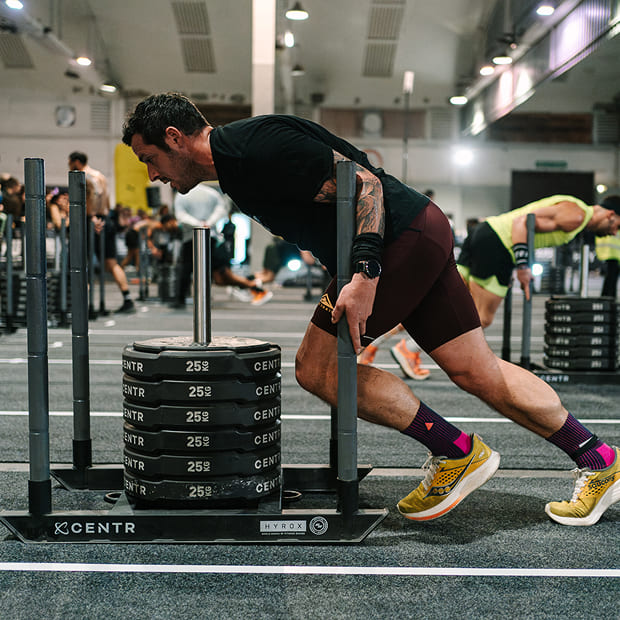
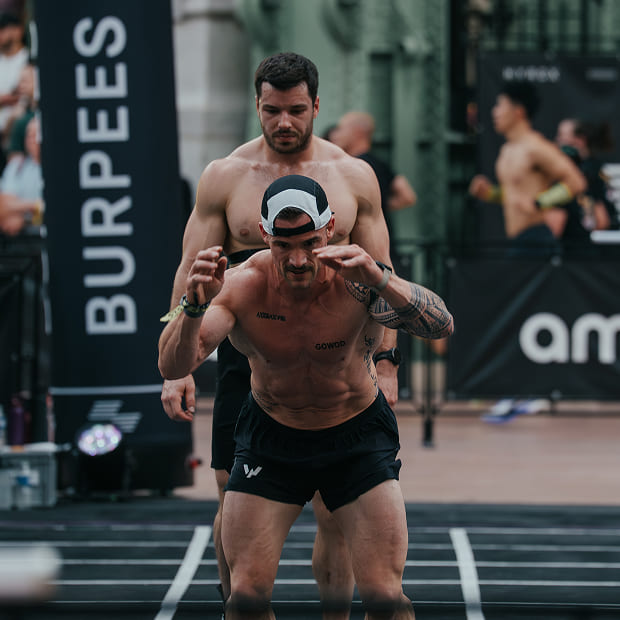
The CrossFit Open 26.3 has officially been announced, and this final Open workout delivers a demanding mix of conditioning and barbell work. Repeated burpees over bar will challenge your breathing and pacing, while the cleans and thrusters introduce progressively heavier loading that tests squat mechanics, front-rack positioning and barbell cycling efficiency.
As the workout progresses through three weight increases, maintaining efficient movement becomes increasingly important. Tight hamstrings can make it difficult to set up with a neutral back when lifting the bar from the floor, which reduces the ability to transfer power effectively during the clean. Limited shoulder rotation can also restrict the front-rack position, making both the clean catch and the thruster far more demanding under fatigue.
At the same time, the repeated burpees require constant hip flexion and extension. If the hip flexors become restricted or fatigued, the transition from the floor back to standing often becomes slower and less fluid.
Preparing these key positions before the workout can help maintain better mechanics as fatigue builds. The GOWOD 26.3 Open protocol is designed to prepare the hips, hamstrings, shoulders and upper back so you can move efficiently and perform at your best.
You can find full movement standards and official details on the CrossFit Games website. Always refer to the official rulebook before submitting a score.
Time cap: 16 minutes
Weights
This workout combines repeated burpees over bar with progressively heavier barbell cycling. It tests:
Because the barbell weight increases after each two-round block, maintaining efficient movement early in the workout becomes especially important. Athletes who manage their breathing on the burpees and keep the barbell moving smoothly in the lighter rounds will often reach the heavier weights with far more energy to continue cycling the barbell efficiently.
If your front-rack position collapses, your squat mechanics deteriorate or your breathing becomes uncontrolled during the burpees, the later stages of the workout can quickly become much more demanding.
Before thinking about pacing, think about positioning.
Workout 26.3 places repeated demand on squat mechanics, front-rack positioning and efficient barbell cycling. The cleans and thrusters require a stable front rack, strong hip drive and an upright torso, while the burpees over bar repeatedly challenge hip extension and breathing control throughout the workout.
If these positions are restricted before you begin, fatigue will amplify the problem.
Targeted mobility activation before your attempt helps you:
Preparing these key positions before your attempt can make a significant difference to how efficiently you move once fatigue begins to build. The GOWOD Open protocol below is designed to help you prepare these positions before starting the workout.
Inside the GOWOD app, the 26.3 activation protocol prepares the hips, thoracic spine, front-rack and overhead positions required for efficient barbell cycling in this workout. With repeated cleans, thrusters and large burpee sets, maintaining strong squat mechanics and stable barbell positioning becomes increasingly important as fatigue builds.
The cleans demand a neutral starting position and efficient hip drive, while the thrusters require smooth force transfer from the squat into the overhead press. Preparing the hips, hamstrings and upper back helps maintain this chain of movement so energy is transferred directly into the bar rather than lost through compensations.
The burpees also place repeated demand on hip flexion and extension. Preparing the hips and posterior chain can help maintain fluid movement patterns when transitioning quickly between the floor and the barbell.
You can choose a 3, 10 or 15-minute version depending on how much time you have before starting the workout.
Without equipment
With equipment
The opening weights may feel manageable, but this workout becomes significantly more demanding as the barbell gets heavier.
For more experienced athletes, the lighter barbell can easily become a trap. Pushing too aggressively in the first rounds may leave you without enough energy once the heavier loads appear. Many athletes will find that the workout truly begins after the first four rounds.
Staying smooth and controlled early allows you to maintain consistent barbell cycling once fatigue increases.
A few elite athletes may target finishing the workout in under 16 minutes, while the very top performances could approach the 15-minute range. For most athletes, reaching the heavier barbells before the time cap will already be a strong result. To set yourself up for success before you begin, activate your body first with the free GOWOD 26.3 Open protocol.
The clean begins from the floor, and the starting position plays a major role in barbell efficiency.
If the hamstrings are tight, many athletes compensate by rounding the lower back to reach the bar. This position reduces the ability to transfer power effectively from the hips to the barbell. Instead of moving efficiently through the legs and hips, energy is lost through the spine.
Releasing the hamstrings and preparing the hinge pattern before the workout helps maintain a neutral back position during the setup. This allows the hips to generate power efficiently and keeps the bar moving smoothly.
The receiving position of the clean also requires good shoulder external rotation. This mobility allows the elbows to move forward quickly into a strong front rack. If this range is restricted, athletes often compensate through the wrists or lose stability in the catch.
Most athletes may choose touch-and-go cleans in the early rounds, while others may find greater consistency performing quick singles throughout the workout. If you choose singles, minimise rest between reps by following the bar to the floor, taking a quick breath and lifting again.
The thruster combines a front squat and a push press into one continuous movement. What makes it challenging is that the energy produced in the squat must transfer directly into the overhead press.
Any mobility restriction in this chain can create an energy leak, so activate beforehand with the GOWOD 26.3 Open protocol.
Good hip mobility and strong back activation help maintain an upright torso during the squat. If the torso collapses forward, the bar path becomes inefficient and the movement becomes significantly more demanding.
Although the elbows usually sit slightly lower in a thruster than in a true front squat, the front-rack mobility required for the clean remains essential for efficient barbell cycling.
The final overhead position is also influenced by shoulder mobility. If shoulder flexion is restricted, releasing tension in the lats or pectorals can help create a cleaner path for the bar overhead.
Athletes who are comfortable with the lighter weights should aim to complete the early thruster sets unbroken. If necessary, the later sets can be broken into two sets or more with short breaks.
Athletes who anticipate difficulty with the heavier weights may benefit from breaking the thrusters earlier to preserve energy for the final rounds.
The burpees over bar play a major role in controlling the overall pace of this workout.
Although they appear simple, burpees involve repeated hip flexion and extension. The hip flexors, particularly the psoas, play a central role in bringing the legs back underneath the body when transitioning from the floor to standing.
If the hip flexors are restricted or fatigued, the movement often becomes slower and less fluid.
Maintaining a consistent rhythm on the burpees helps control breathing and ensures you arrive at the bar ready to lift. Whether you step or jump your feet during the burpee, the goal should be steady, sustainable movement rather than sprinting early and needing long rest periods before returning to the barbell.
Efficient pacing here will often determine how smoothly the rest of the workout unfolds.
With burpees separating every barbell set, transitions become a key factor in overall performance.
Athletes who move efficiently from the floor to the barbell often maintain better momentum throughout the workout. Instead of bursts of speed followed by long rest periods, aim for a pace that allows you to keep moving consistently across all six rounds.
Small improvements in transition efficiency can save significant time over the course of the workout.
In normal training, small movement restrictions often go unnoticed. During the CrossFit Open, they tend to appear quickly.
This is why we recommend following the GOWOD 26.3 Open protocol before approaching the workout.
High repetitions, increasing loads and strict time caps expose limitations in positioning and barbell mechanics that might not normally affect a single workout.
In 26.3, these limitations may show up as:
When fatigue builds, usable range of motion often decreases. If the key positions required for the clean, thruster and burpee transitions are already restricted before the workout begins, those limitations tend to become more noticeable as the rounds progress.
Preparing your movement quality before the workout helps you:
Can I retake CrossFit Open 26.3?
Yes. You can repeat the workout during the official submission window. Only the score submitted before the deadline will count.
Do I need a judge to submit my score?
Yes. Scores must be judged according to official standards or recorded following the approved video submission guidelines.
Does my first attempt count if I redo the workout?
No. Only the final score you submit before the deadline will be registered.
Should I redo 26.3?
It depends on your pacing, execution and preparation. If your first attempt was limited by strategy, positioning or preparation rather than your actual fitness capacity, a second attempt may lead to a better result.
Make sure you recover properly between efforts. The GOWOD recovery protocol can help restore mobility, reduce fatigue in key muscle groups and prepare your body for a stronger second attempt.
The CrossFit Open rewards preparation.
The 26.3 activation protocol inside GOWOD is designed to prepare your hips, hamstrings, shoulders and front-rack positioning for the demands of this workout.
Choose the format that fits your warm-up window:
Prepare your positions before the first rep.
Move efficiently when fatigue arrives.
Let your performance be determined by your fitness, not by restricted movement.
Good luck from the GOWOD team, and see you on the leaderboard.
You’re only 3 steps away from unlocking your full potential.