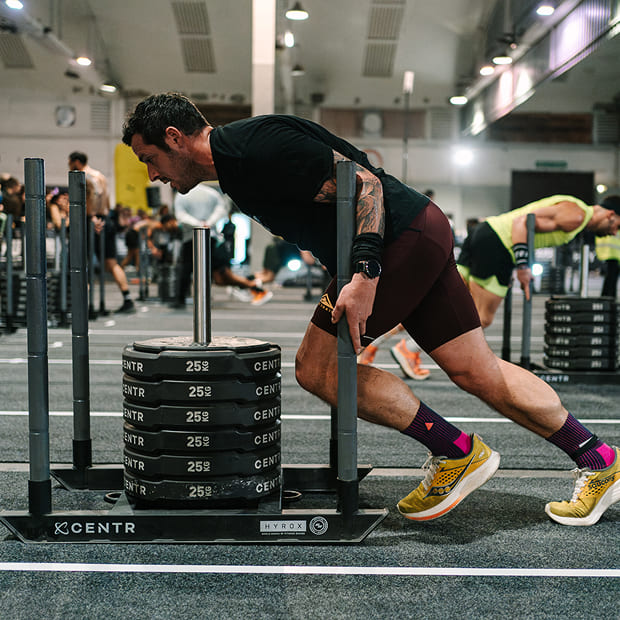
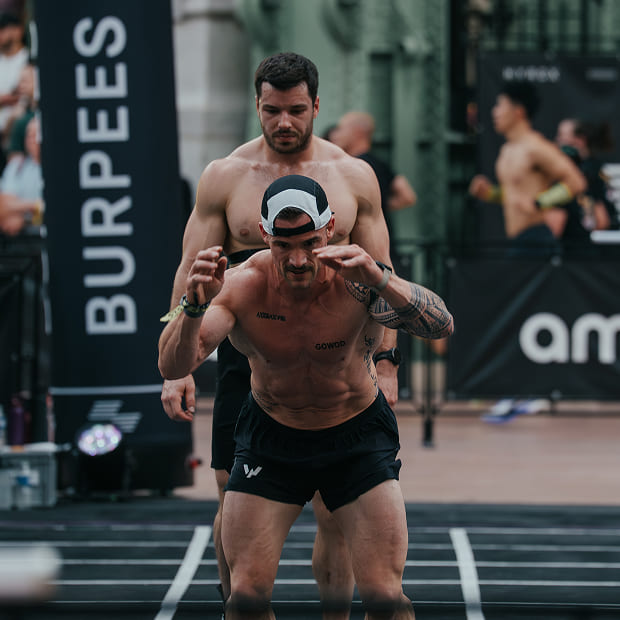
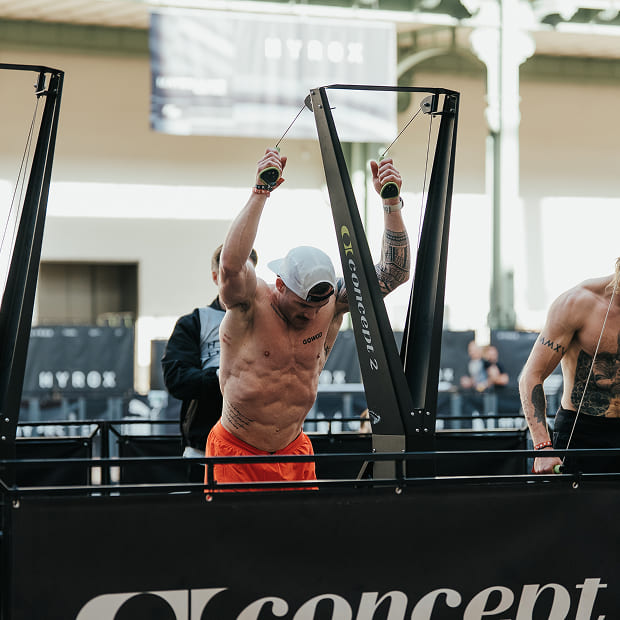
The CrossFit Open 26.2 has officially been announced, and this workout combines overhead walking lunges, dumbbell snatches and progressively more demanding gymnastics movements. Shoulder stability, grip endurance and efficient pulling mechanics will become increasingly important as the workout progresses from pull-ups to chest-to-bar pull-ups and finally ring muscle-ups.
When intensity rises and fatigue builds, usable range of motion decreases. Restrictions in the shoulders, thoracic spine or hips can make it much harder to maintain stable overhead positions throughout the workout. The GOWOD Open protocol helps prepare your body for these demands so you can move better and perform at your best.
You can find full movement standards and official details on the CrossFit Games website. Always refer to the official rulebook before submitting a score.
Time cap: 15 minutes
This workout combines overhead stability, pulling capacity and grip endurance under fatigue. It tests:
If your overhead position collapses, your shoulders fatigue early or your pulling mechanics deteriorate, the later stages of the workout become significantly more demanding.
Before thinking about pacing, think about positioning.
Workout 26.2 places repeated demand on shoulder stability, overhead control and pulling mechanics. The overhead lunges require strong shoulder positioning and thoracic extension, while the dumbbell snatches and gymnastics movements accumulate grip and upper-body fatigue.
If those positions are restricted before you begin, fatigue will amplify the problem.
Targeted mobility activation before your attempt helps you:
Preparing these key positions before your attempt can make a significant difference to how efficiently you move once fatigue sets in. The GOWOD Open protocol below is designed to help you prepare these positions before starting the workout.
Inside the GOWOD app, the 26.2 activation protocol prepares your shoulders, thoracic spine and hips for the specific demands of this workout before your attempt. With overhead walking lunges, dumbbell snatches and progressive gymnastics movements, preparing these positions can help you move more efficiently once fatigue begins to accumulate.
You can choose a 3, 10 or 15-minute version depending on how much time you have before starting the workout.
Without band
With band
Go in prepared. Move well from rep one. Let your fitness decide the outcome, not your restrictions.
These protocols are available for free in the GOWOD app. And if you’ve completed your Mobility Test, they automatically adapt to your weakest area.
For elite athletes with strong gymnastics capacity, this workout may feel like a sprint. Fast transitions and large unbroken sets can lead to finishing times well under the time cap.
For most athletes, the challenge will come from the gymnastics progression. The workout moves from pull-ups to chest-to-bar pull-ups and finally ring muscle-ups, increasing the technical demand each round.
The lats play a significant role in this progression. Tight lats can limit overhead range of motion and place additional strain on the shoulders. This affects both the overhead lunges and the pulling movements.
Releasing the lats before the workout can improve overhead positioning while also preparing the shoulders for the pulling demands of the gymnastics elements.
If pull-ups and chest-to-bar pull-ups are challenging, breaking the sets early into smaller, manageable chunks can help maintain consistency and reduce the likelihood of failed reps.
If you are comfortable with the earlier gymnastics movements but less confident with muscle-ups, pacing the early rounds slightly more conservatively can help ensure you reach the final stage of the workout ready to attempt them.
The overhead walking lunges will challenge shoulder stability, trunk control and balance, especially as fatigue builds.
Focus on actively pressing into the dumbbell to keep it stacked over the shoulder. A strong overhead position allows the body to stay tall and stable during each step.
Limited shoulder flexion or poor overhead stability forces the shoulders to compensate for the load, which can lead to early fatigue and inefficient movement. Preparing the shoulders and thoracic spine before the workout helps maintain a stable overhead position throughout the lunges.
Hip positioning also matters here. Proper psoas activation helps stabilise the pelvis and maintain an upright torso during each step. If the hips are not prepared, the pelvis may tilt forward and make it harder to maintain a clean overhead position.
There is no requirement to switch arms during the lunges. Athletes aiming for very fast times may keep the dumbbell in the same arm for an entire set. However, many athletes will benefit from switching arms periodically to distribute fatigue more evenly.
Maintaining balance, stability and full lockout will help avoid costly no-reps.
The dumbbell snatch volume is manageable, but the movement still places repeated demand on the posterior chain and shoulders.
The snatch begins from the floor, and both heads of the dumbbell must touch the ground every repetition. If hamstrings are tight, athletes often compensate by rounding the lower back to reach the dumbbell.
Over multiple rounds, this can create unnecessary fatigue and congestion in the lower back.
Instead of reaching for the dumbbell with the back, focus on dropping the hips and maintaining a strong, neutral spine during the setup.
Efficiency is key. Use the legs and hips to generate momentum and drive the dumbbell overhead rather than relying entirely on the shoulders.
If fatigue begins to build in the upper body, short breaks may help preserve movement quality and protect performance in the pulling movements that follow.
Failed reps can be extremely costly in a workout like this.
Focus on maintaining clean and efficient movement standards:
Maintaining full range of motion will help you avoid wasted energy and unnecessary fatigue.
A well-structured warm-up can have a significant impact on performance in this workout.
Use your preparation time to practise efficient dumbbell cycling, establish a stable overhead position for the lunges and prepare your pulling mechanics.
Efficient movement patterns established before the workout often save valuable time once fatigue sets in.
In regular training, small inefficiencies often go unnoticed.
In the Open, they get exposed.
High repetition, fixed time caps and competition pressure magnify small technical limitations, especially in workouts that demand overhead stability and complex pulling movements.
In 26.2, these limitations may appear as:
When fatigue increases, usable range of motion can decrease. If you start the workout with restricted positions, those limitations often become more noticeable as the workout progresses.
Preparing your movement quality before the workout helps you:
Can I retake CrossFit Open 26.2?
Yes. You can repeat the workout within the official submission window. Only the score you submit before the deadline will count.
Do I need a judge to submit my score?
Yes. To submit a valid score, the workout must be judged according to official standards or recorded under the approved video submission guidelines.
Does my first attempt count if I redo the workout?
No. You may attempt the workout more than once, but only your final submitted score before the deadline will be registered.
Should I redo 26.2?
That depends on pacing and execution. If your first attempt was limited by strategy errors or preparation rather than fitness, a second attempt may be worthwhile. Just ensure you recover properly between efforts. The GOWOD recovery protocol is designed to support that process.
Always refer to the official CrossFit Games website for full rules and movement standards.
The CrossFit Open rewards preparation. The 26.2 activation protocol inside GOWOD is designed to prepare your shoulders, thoracic position and hips for the demands of this workout.
Choose your format:
3-minute MobiFlash for fast activation.
10-minute focused prep.
15-minute full movement prep.
Go in warm.
Go in ready to perform.
Let your fitness be the limiting factor, not your mobility.
Good luck from the GOWOD team, and see you on the leaderboard.
You’re only 3 steps away from unlocking your full potential.