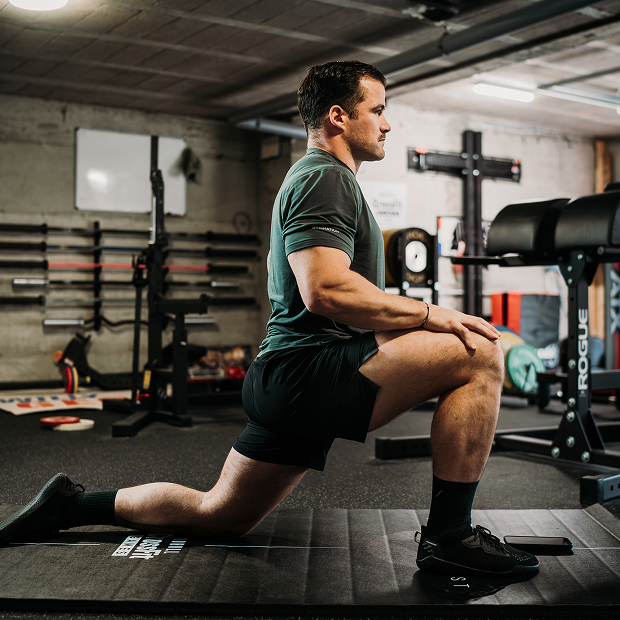
The best mobility exercises for running prepare your body, mainly the lower body, to handle repetitive impacts so you feel ready from the first stride and reduce the risk of injury.
Science is clear — the ankle is the joint most affected by running, followed by the knee, and in third place, the calves. Passive stretching is known to be detrimental before exercise, which is why active stretching, muscle activation, and massage should be prioritised.
These five exercises will help you have a body ready for effort and prevent issues such as runner’s knee, shin splints, Achilles tendon pain, and more:
Minimize injury risk, improve recovery, and prepare your body for every step with personalized mobility training.
Running is repetitive, with each stride placing stress on the same tissues. Common causes of leg stiffness and discomfort include:
These issues may cause the lower back and knees to compensate, leading to discomfort if not addressed.
Running efficiently depends on a chain of muscles working together:
Restricted mobility in the hips, calves, and hamstrings can alter running mechanics. This may reduce efficiency and increase stress on the lower back or knees. Mobility work may not only support performance but also aid recovery by promoting circulation and soft tissue health.
Dynamic stretches, such as leg swings, may prime the body before running. Specific stretches or release-based movements, such as calf rolling, may support recovery after training. Using both approaches strategically is often most effective.
Do runners need to stretch every day?
Many runners find daily mobility work may help reduce tightness, especially in the calves and hips. Frequency depends on training load and recovery.
When is the best time to stretch for running?
Dynamic stretches may be most effective before a run, while static or release-based stretches are often better after running.
Can stretching reduce the risk of running injuries?
Stretching alone cannot guarantee injury prevention, but it may support mobility, which in turn reduces the likelihood of compensations that stress the joints.
How long should I hold each stretch?
Most stretches can be held or repeated for 30–60 seconds, but duration depends on the goal — activation before running or recovery afterwards.
What if stretching doesn’t help my pain?
If discomfort persists, it’s important to explore the root cause with a qualified health professional. Pain may indicate imbalances or issues that require more than stretching.
You’re only 3 steps away from unlocking your full potential.