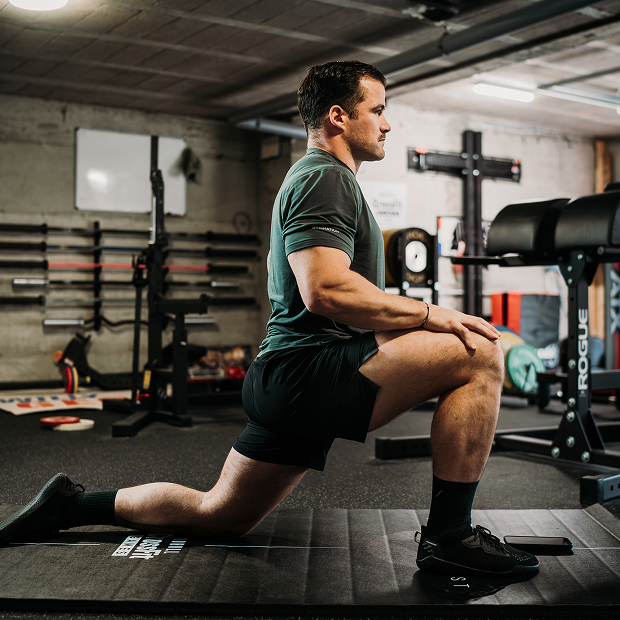
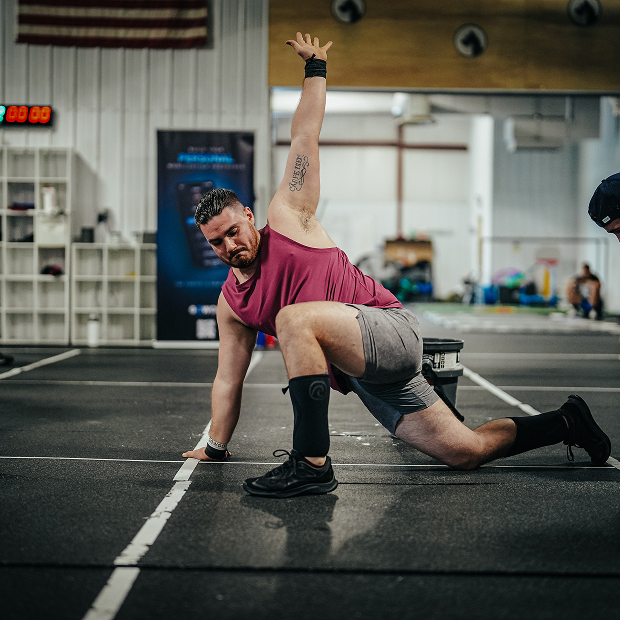
Rotation is an important component of human movement, but it is often not specifically trained.
It plays a role in many everyday activities and in sports, particularly in coordinating movements between the upper and lower body. It contributes to the transmission of forces across different body segments, depending on the task being performed. When rotational capacity is limited, the body may adopt different movement strategies, which can sometimes alter the fluidity or overall coordination of the movement.
In some people, rotational mobility may be influenced by repetitive movement patterns, limited positional variability, or a lack of exposure to certain ranges of motion. These factors may be associated with a feeling of stiffness or less efficient use of certain ranges of motion.
A mobility approach can help improve access to these ranges of motion as well as control over them by engaging the hips, spine, and shoulders in a coordinated manner. Below, GOWOD has selected five mobility exercises recommended by experts to improve rotational range of motion and promote more efficient and better-coordinated movements.
This routine is designed to improve how your body rotates as an integrated system, not as isolated joints.
Rotation depends on coordinated input from the hips, spine, and shoulders. When one segment underperforms, another is forced to compensate, often leading to inefficient movement and increased strain. By targeting these areas together, this routine helps restore both range and control across rotational patterns:
Together, these movements address the key limitations that reduce rotational efficiency.
By improving both mobility and coordination across the system, they may help reduce compensations, improve force transfer, and support smoother, more efficient movement in both training and daily activity.
Rotation does not depend on a single joint, but rather on coordination between several regions, including the hips, spine, and shoulders. This coordination varies depending on the individual, the task, and the context, and does not follow a single pattern.
In many cases, limited rotation is not solely due to a lack of joint range of motion, but also to how the movement is used and controlled. Repetitive movement patterns and low variability can influence the ability to achieve certain ranges of motion or use them effectively.
Certain lifestyles or training regimens expose individuals to movements in specific planes, often anterior-posterior. This exposure may be associated, in some people, with reduced use of rotational movements and decreased control within these ranges of motion.
Several factors may be involved:
Thus, rotation may appear limited not only in terms of range of motion but also in terms of control. A person may be able to achieve certain positions but have difficulty using them in a fluid or coordinated manner depending on the context.
Take our FREE mobility and flexibility test to identify your strengths and areas for improvement. In minutes, get a detailed breakdown of each body zone with insights and personalized guidance to progress.
To improve rotation, it is important to understand how it should be distributed throughout the body. Each segment plays a specific role, and when that balance is lost, movement quality is affected.
When rotation is well distributed across these areas, movement becomes more efficient. When one area is restricted, the system compensates, often by overloading the lower back.
Improving rotational mobility is therefore less about increasing range in isolation and more about restoring balance across the system.
Rotation plays a central role in the generation, transfer, and control of force. In efficient movement, force is transferred sequentially through the body. For example, during a rotational action, the hips initiate movement, the torso follows, and the upper body completes the motion. This sequence relies on both mobility and timing.
When rotational mobility is limited:
This often results in movements that feel forced rather than fluid.
Improving rotational mobility may help restore this sequencing, allowing movement to feel smoother and more controlled. This is particularly relevant in sports, but also in everyday activities such as turning, reaching, or changing direction.
Improving rotation is not just about accessing more range. It is about learning how to control the range across multiple joints and positions.
In practice, this means:
It is also important to expose the body to rotation regularly. Unlike strength, which can be trained less frequently, mobility responds well to consistent, low-intensity input.
Over time, this consistent exposure helps the body not only access more range, but use it efficiently within real movement patterns.
Rotational mobility improves best through consistent, repeated exposure rather than occasional intensive sessions. Short, regular sessions allow the body to gradually regain access to rotational ranges while improving control within those ranges.
For most people, this means integrating rotation regularly throughout the week, whether as part of a daily mobility routine, a warm-up before training, or a short recovery session. The key is consistent exposure rather than occasional effort.
The goal is not to force rapid changes, but to build sustainable improvements in how the body moves. As rotational capacity improves, movement becomes more efficient, less reliant on compensation, and better able to handle both daily demands and athletic performance.
Why is rotational mobility important?
Rotational mobility is essential for how your body transfers force and coordinates movement. Most real-world and athletic movements are not purely linear. They rely on rotation to generate, transfer, and control force.
When rotation is well distributed across the hips, spine, and shoulders, movement feels efficient and controlled. When it is limited, the body compensates, often by overusing areas like the lower back, which can reduce performance and increase strain.
Why do I feel tight when I try to rotate?
Feeling “tight” in rotation is often not just a matter of flexibility. It is usually a combination of restricted joint range and reduced neuromuscular control.
In many cases, the body is protecting itself by limiting access to ranges it cannot control. This is why improving rotation requires both mobility and coordination, not just stretching deeper into a position.
Can improving rotation reduce lower back pain?
In some cases, it can help improve comfort, but the relationship is not universal. The lumbar spine has a relatively limited range of rotation compared to other regions, yet it contributes to overall movement.
When mobility in the hips or thoracic spine is reduced, the body may adapt its movement strategies. Depending on the situation, some of these adaptations may be associated with increased mechanical stress on the lumbar region, particularly during repetitive movements or under load.
Improving mobility and control of the hips and upper back can help better distribute the contribution of different body regions during rotational movements. For some people, this may be associated with reduced discomfort, as part of a comprehensive approach that also includes load and activity management.
How long does it take to improve rotational mobility?
Improvements depend on consistency and the targeted areas. Some people may notice short-term improvements in how movement feels after a single session, particularly in terms of stiffness. However, long-term changes in range and control typically require sustained exposure.
The focus should be on gradual, sustainable progress rather than immediate increases in range.
Should rotational mobility be trained daily?
Low-intensity rotational mobility can be trained frequently without placing excessive stress on the body. Regular exposure helps maintain and improve both range of motion and control. Short daily sessions are often more effective than occasional longer sessions when the goal is to improve movement quality.
Is rotation more about the hips or the spine?
Rotation is a shared responsibility across multiple regions. The hips are the primary drivers, especially in lower-body movement. The thoracic spine contributes significantly to upper body rotation, while the lower back is designed to remain relatively stable.
Effective rotation depends on how well these areas work together, rather than on how much movement occurs in a single joint.
Better rotation is not just about moving further, it’s about moving more efficiently through the hips, spine, and shoulders.
GOWOD helps you identify where your rotation is limited and gives you the tools to improve it with targeted, guided routines. Instead of guessing what to work on, you can focus on the areas that will have the biggest impact on how you move.
Download GOWOD now and start unlocking smoother, more efficient rotation.
You’re only 3 steps away from unlocking your full potential.