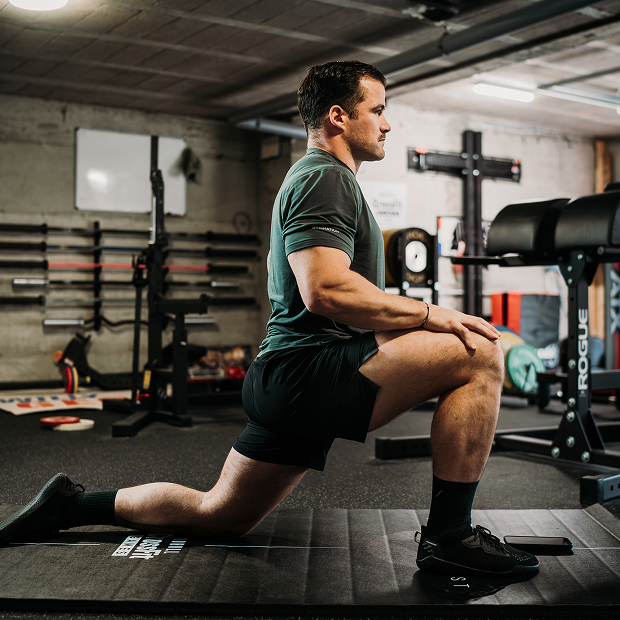
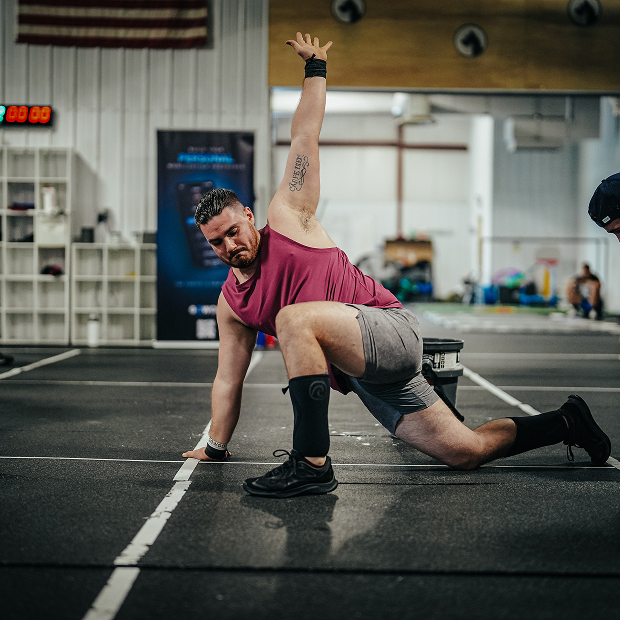
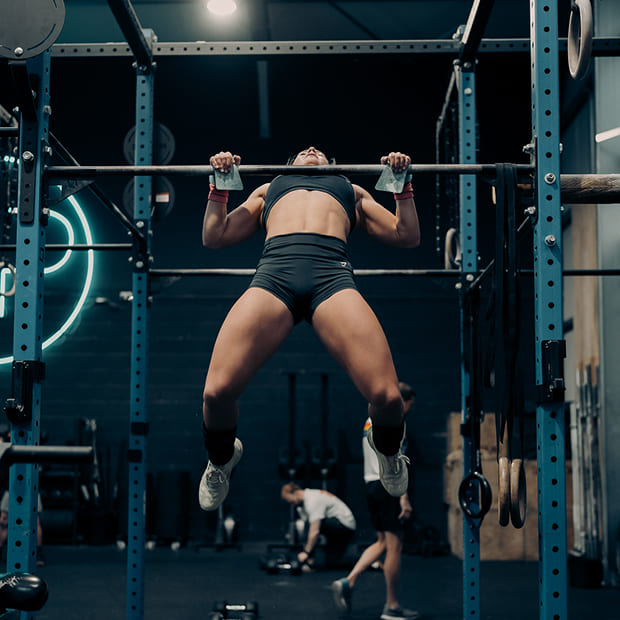
Triathlon does not ask your body to perform one movement pattern well. It asks it to perform three in sequence over hours of sustained effort, each making its own specific mobility demands. The aero position on the bike progressively compresses the hip flexors and shortens the posterior chain. Running off the bike requires immediate access to hip extension range that the bike has been actively restricting. Swimming demands shoulder flexion range of motion and scapular stability that other disciplines do not develop. When any of these capacities is restricted, mechanical efficiency drops and the energy cost of every stroke, pedal, and stride rises.
Kristian Blummenfelt, Olympic champion, Ironman World Championship winner, and holder of the Ironman world record of 7:21:12, built this routine around all three sets of demands. Each movement targets a specific physical requirement across swimming, cycling, and running so your mechanics stay efficient from the first stroke to the finish line.
This routine is built around what triathlon actually demands from your body across all three disciplines: hip rotation and flexor extensibility for efficient cycling and running mechanics, posterior chain length for full stride capacity off the bike, shoulder flexion range and scapular control for an effective catch in the water, and ankle mobility to support efficient force transfer at every ground contact. Each movement targets one or more of those requirements directly.
Together, these movements address the specific physical limitations that reduce mechanical efficiency across all three triathlon disciplines. By building both range and active control through the hips, posterior chain, shoulders, and ankles, they support stronger mechanics and lower energy cost from the first stroke to the final stride.
Take our FREE mobility and flexibility test to identify your strengths and areas for improvement. In minutes, get a detailed breakdown of each body zone with insights and personalized guidance to progress.
Triathlon is unique among endurance sports because it requires the body to perform three mechanically distinct movement patterns in sequence under accumulated fatigue. Each discipline creates its own specific mobility demands, and the restrictions one discipline creates directly affect performance in the next. The relationship between these demands is not additive. It is compounding. A hip flexor restriction caused by the bike does not wait until the run to take effect. It begins reducing mechanical efficiency the moment it develops.
These demands do not resolve between disciplines. The restriction that builds during the swim affects the bike, and the restriction that builds on the bike affects the run. Preparing for all three sets of demands before training or racing allows the body to maintain mechanical efficiency from start to finish.
What does triathlon require from your mobility?
Triathlon requires mobility across three distinct sets of demands that must all be available simultaneously: hip flexor extensibility and hip rotational range for efficient cycling mechanics and running stride off the bike, shoulder flexion range and scapular control for an effective catch and pull in the swim, and posterior chain extensibility for full stride capacity in the run. Because these demands compound across disciplines rather than operating independently, a restriction in one area creates cascading mechanical inefficiencies that increase the energy cost of every subsequent movement.
Why is hip mobility the most critical area for triathlon performance?
The aero position is the primary reason. Spending hours with the hip in sustained flexion progressively reduces the hip flexors' extensibility and limits the rotational range available through the pedal stroke. By the time the bike leg ends, the hip flexors have been in a compressed position long enough that they cannot immediately produce full hip extension in the running stride. This shortens the stride, tilts the pelvis anteriorly, and raises the energy cost of running from the first step off the bike. No other single restriction has as direct and immediate an effect on triathlon performance as hip mobility.
Should I do mobility work before or after triathlon training sessions?
Both, and the focus should change with the session. Before a bike session, the priority is hip flexor and posterior chain preparation to meet the demands of the aero position. Before a run, the focus shifts to hip extension range and ankle mobility. Before a swim, shoulder flexion and scapular control preparation is most relevant. Post-session mobility supports tissue homeostasis and helps restore the ranges that the session's sustained positions have compressed. Treating pre and post-session mobility as having the same purpose reduces the effectiveness of both.
How long does it take to improve hip mobility for triathlon?
Passive flexibility changes, driven by mechanisms such as viscoelastic relaxation and adaptations in stretch tolerance, can begin to become noticeable within a few weeks of consistent work. However, the quality that translates into triathlon performance is active hip mobility under the sustained loads of cycling and running, which requires the nervous system to maintain and control that range while the hip works against resistance over hours of effort. This adaptation takes longer to develop. For most athletes, meaningful improvements in hip extension range off the bike and running stride quality are noticeable within 4 to 8 weeks of consistent, targeted work.
Can this routine help with standalone performance in running, cycling, or swimming?
Yes. The hip flexor extensibility, hip rotational control, posterior chain length, and shoulder mobility developed in this routine are foundational to all three disciplines independently. Cyclists benefit from improved hip-rotation and aero-position tolerance. Runners benefit from better hip extension range and posterior chain extensibility. Swimmers benefit from improved shoulder flexion and scapular control for a more effective catch. The routine's value is not limited to triathlon. Any athlete who trains in one or more of these disciplines will find the physical capacities it develops directly relevant to their performance.
Download GOWOD and start with your personalized mobility assessment.
You’re only 3 steps away from unlocking your full potential.