Struggling to fully straighten your arms after pull-ups is common, and it usually reflects how the biceps and forearms were loaded during the set. Pull-ups require the biceps brachii and brachialis to control the descent from the top position under load, an eccentric contraction pattern that is strongly linked to delayed onset muscle soreness. The forearm flexors also work continuously to maintain grip throughout each rep, adding further tension around the elbow.
This restriction is usually temporary and linked to muscular fatigue rather than injury. That said, if you cannot straighten your arm within a day or two, or the restriction is accompanied by sharp pain, swelling, bruising, or a locking or catching sensation in the joint, this warrants assessment by a qualified healthcare professional, as it may indicate a strain or joint issue rather than ordinary post-exercise tightness.
A structured mobility and self-care routine may help address training-related tightness, typically by easing tension in the biceps and forearms and supporting a return to full, comfortable elbow extension.
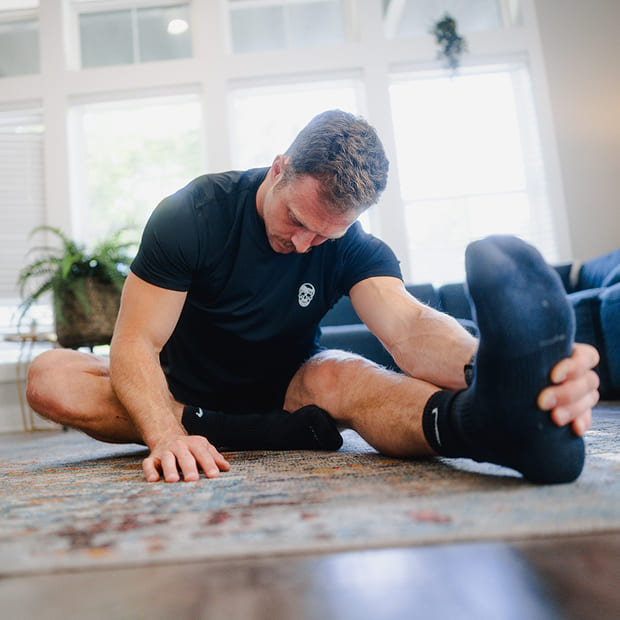
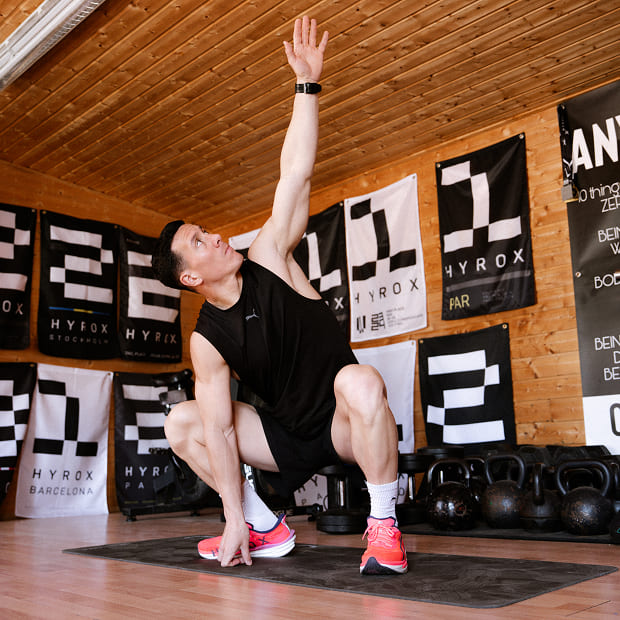
Below, GOWOD has selected four expert-backed movements to target this after pull-ups. These exercises work the biceps, forearms, and surrounding structures, and can be added to your routine with minimal time or equipment.
A routine for post-pull-up elbow tightness should focus on easing tension in the biceps and forearms and restoring a comfortable end range of elbow extension:
Take our FREE mobility and flexibility test to identify your strengths and areas for improvement. In minutes, get a detailed breakdown of each body zone with insights and personalized guidance to progress.
Restricted elbow extension after pull-ups reflects specific demands the exercise places on the biceps, brachialis, and forearm flexors.
Throughout each rep, the biceps and brachialis contract eccentrically to control the descent from the top of the movement, a loading pattern strongly associated with delayed onset muscle soreness. The forearm flexors are also under sustained isometric demand to maintain grip, which adds further tension around the elbow. Fatigued or sore muscles are often perceived as stiffer, and the nervous system may limit the end range of a movement to protect a fatigued muscle-tendon unit, which is often felt as an inability to fully straighten the arm.
Key mechanisms at play include:
This is one reason why restricted elbow extension after pull-ups is often not fully resolved by focusing on the elbow joint alone. The biceps, brachialis, and forearm flexors all contribute to how the arm feels afterward.
Different structures around the elbow and forearm contribute to this restriction for different reasons. Understanding these relationships helps explain why a broad routine, rather than a single stretch, is often more effective.
These areas do not operate independently. Tightness in the forearm flexors can influence how the elbow moves overall, which then places additional demand on the biceps and brachialis to complete the same range of motion.
Restricted elbow extension after pull-ups is not just a comfort issue, it can also carry over into how the next session feels and performs.
When the biceps and forearms remain tight and fatigued, the elbow may not reach its full, controlled range in the following session. For athletes training regularly, this may lead to:
Research on resistance training recovery generally suggests that structured recovery work, alongside adequate rest between sessions, supports a return to baseline muscle function and may reduce the likelihood of compounding fatigue. Mobility work targeting the biceps and forearms supports this process, rather than replacing it.
A more effective approach tends to be consistent and to target the muscles that carried the load, rather than simply stretching the elbow itself.
A structured approach may include:
The goal is not to force the elbow into full extension immediately after training, but to reduce the tightness that built up from the specific demands of the exercise.
GOWOD's approach is based on individual assessment, identifying where your specific tightness and restrictions exist, whether that is the biceps, brachialis, or forearm flexors, and prioritizing those areas. By starting with a personalized assessment, you can focus on what is actually driving your arm tightness rather than following a generic routine.
From there, you can access a full mobility library of guided exercises to build targeted routines that evolve with your training.
If restricted elbow extension does not ease within a day or two, or is accompanied by sharp pain, swelling, bruising, or a locking or catching sensation in the joint, seek assessment from a qualified healthcare professional, as this may indicate a strain or joint issue rather than ordinary post-exercise tightness.
Why can't I straighten my arms after pull-ups?
This is usually linked to eccentric loading of the biceps and brachialis during the lowering phase of each rep, combined with sustained grip demand in the forearms. The nervous system may also limit end-range extension as a protective response to a fatigued muscle-tendon unit.
Is it normal to not be able to straighten your arms after pull-ups?
A degree of restricted extension after a hard pulling session is common and typically resolves within a day or two as muscular fatigue eases. It is not something to expect after every session, and persistent or worsening restriction warrants attention.
Can mobility exercises help restore full elbow extension after pull-ups?
Mobility work targeting the biceps, brachialis, and forearm flexors may help ease tension and support a return to full extension. Addressing all three areas may be more helpful than focusing on the elbow joint alone.
How long should an arm mobility routine take?
Effective routines do not need to be long. A few minutes after training, performed consistently, tend to be more useful than one long, infrequent session. The focus should be on targeting the muscles that carried the most load rather than duration alone.
Should I stretch before or after pull-ups?
Both serve different purposes. Mobility work before training may help you access a fuller, more controlled range for the session ahead. Work after training can help address tightness and support recovery in the biceps and forearms.
When should restricted elbow extension be checked by a professional?
If you cannot straighten your arm within a day or two, or the restriction is accompanied by sharp pain, swelling, bruising, or a locking or catching sensation in the joint, seek assessment from a qualified healthcare professional. Ordinary muscular tightness from training does not typically present with these features.
If restricted elbow extension keeps showing up after pull-ups, a generic stretch can offer temporary relief, but a personalized approach may better address what is actually driving it.
GOWOD analyzes your mobility, identifies your restrictions, and builds tailored routines around your body and your training. Whether you are looking to ease arm tightness, support recovery between sessions, or pull with a fuller range, having a structured plan can make a real difference.
With GOWOD, you get:
Download GOWOD now and start improving the way you move.
You’re only 3 steps away from unlocking your full potential.