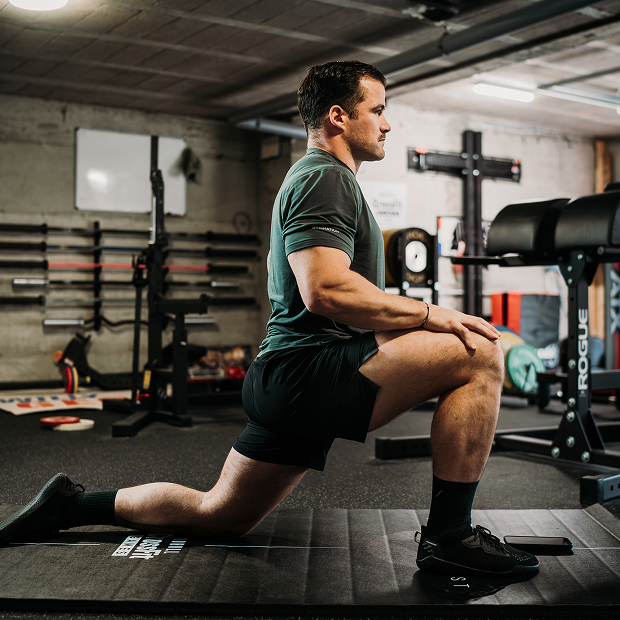
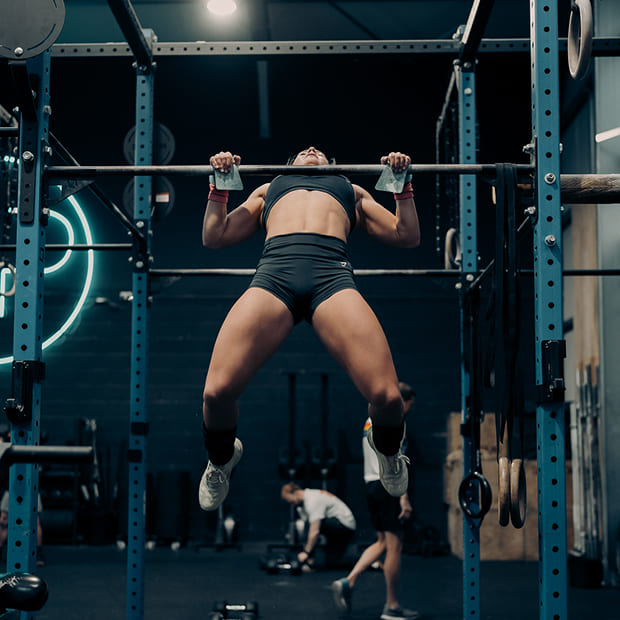
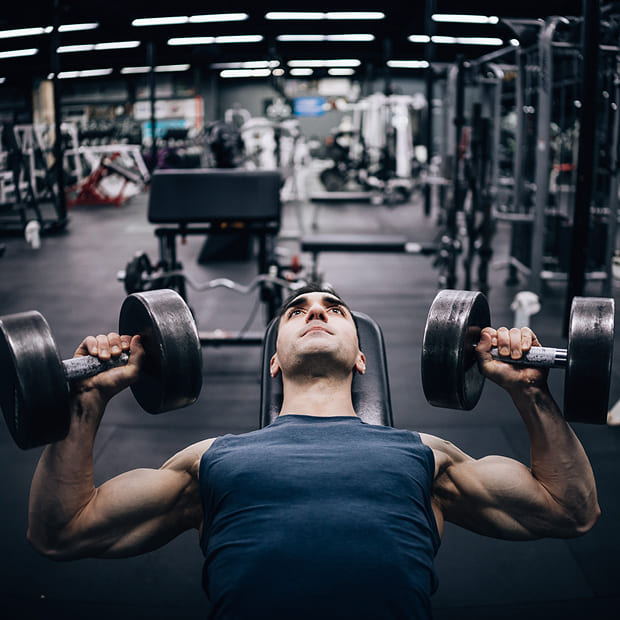
A heavy deadlift demands a specific physical environment before the bar leaves the floor. Your hamstrings need to be extensible enough to allow deep hip flexion while your spine stays neutral. Your hips need to move freely so you can load your posterior chain from a mechanically sound starting position. And your lower back and glutes need the coordination to maintain position through the full range of the pull. When any of those capacities is limited, the position breaks down under load, and the lift costs more than it should.
Brooke Wells, ten-time CrossFit Games athlete and one of the most consistent performers in the sport, built this routine around those exact demands. Each exercise targets a specific physical requirement of the deadlift, so you can get into a stronger starting position and maintain it through every rep.
This routine is built around what the deadlift actually demands of your body: sufficient hamstring extensibility to reach deep hip flexion without lumbar flexion, hip mobility to load the posterior chain from a strong starting position, and lumbopelvic coordination to maintain a neutral spine throughout the full pull. Each exercise targets one or more of those requirements directly.
Together, these movements address the specific physical limitations that compromise deadlift position and mechanics. By building both range and active control through the hamstrings, hips, and lumbar spine, they support a stronger setup and more consistent technique across working sets.
Take our FREE mobility and flexibility test to identify your strengths and areas for improvement. In minutes, get a detailed breakdown of each body zone with insights and personalized guidance to progress.
The deadlift is a full posterior chain movement. It requires the body to produce and control force from a position of deep hip flexion while maintaining a neutral spine, then extend through the hip and knee under load. That combination of demands makes it one of the most technically exacting movements in strength training. A restriction in any of the relevant systems does not just reduce performance; it shifts load onto structures not designed to absorb it repeatedly.
These demands are present on every rep. A restriction that feels manageable at lower weights becomes a significant mechanical problem as intensity increases. Preparing these capacities specifically before heavy work is what allows the position to hold up across a full working session.
What does the deadlift require from your mobility?
The deadlift requires sufficient hamstring extensibility to reach deep hip flexion without lumbar flexion, enough hip mobility to set up with the bar over mid-foot in a mechanically efficient position, and the lumbopelvic coordination to maintain a neutral spine through the full range of the pull. A restriction in any one of these redirects load onto structures that are not designed to absorb it repeatedly, most commonly the lumbar extensors.
Why do hamstrings limit deadlift performance?
The hamstrings cross both the hip and the knee, making them a primary determinant of how deeply you can hinge at the hip while maintaining a neutral spine. When they lack sufficient extensibility, the pelvis compensates by tilting posteriorly at the bottom of the setup, pulling the lumbar spine into flexion. This places the lower back under significant compressive and shear load at the most mechanically demanding point of the lift. Addressing hamstring extensibility is therefore not just a performance consideration; it is a fundamental requirement for safe, repeatable loading.
Should I do mobility work before or after lifting?
Both, but the purpose is different. Pre-lifting mobility prepares the specific joints and movement patterns you are about to load, so your body can access the positions the lift requires from the first rep. Post-session mobility supports tissue homeostasis and restores range of motion in structures that have been working under load. Using the same routine for both reduces the effectiveness of each. Pre-session work should be shorter, more targeted, and focused on the movements you are about to train.
How long does it take to improve hamstring extensibility for the deadlift?
Passive flexibility changes, driven by mechanisms such as viscoelastic relaxation and adaptations in stretch tolerance, can become noticeable within a few weeks of consistent work. However, the quality that carries over to the deadlift is active hamstring extensibility under load, which requires the nervous system to allow and control that range while the posterior chain produces force. This adaptation takes longer to develop. For most athletes, meaningful improvements in setup position and spinal control under load are noticeable within 4 to 8 weeks of consistent, targeted work, with continued development over the following months.
Can this routine help with other posterior chain movements, such as Romanian deadlifts or good mornings?
Yes. The hamstring extensibility, hip mobility, and lumbopelvic coordination developed in this routine are foundational to all hip hinge patterns. Romanian deadlifts, good mornings, kettlebell swings, and any movement that requires controlled hip flexion under load place overlapping demands on the same systems. Improvements in these capacities support cleaner mechanics and stronger positions across all of those movements, not just the conventional deadlift.
Download GOWOD and start with your personalized mobility assessment.
You’re only 3 steps away from unlocking your full potential.