Lower back tightness after deadlifts is common, and it usually reflects ordinary muscular fatigue rather than injury. Throughout each rep, the erector spinae and multifidus contract isometrically to resist lumbar flexion under load, and electromyographic analysis of the deadlift shows meaningful lumbar paraspinal activation, particularly during the more flexed portions of the lift (Escamilla et al., 2002). Repeated heavy sets concentrate this demand on the same paraspinal muscles, and this is a common contributor to the tightness felt across the lower back afterward.
It is worth being clear that ordinary muscular fatigue is different from pain linked to a disc or nerve issue. If pain radiates into the leg, is accompanied by numbness, tingling, or weakness in the leg, or presents with changes in bladder or bowel control or numbness in the saddle area (groin or inner thighs), this requires urgent medical attention, as it may indicate a nerve or disc-related issue, including cauda equina syndrome, which needs immediate care and is not something mobility work addresses.
A structured mobility and self-care routine can help address ordinary training-related tightness by easing tension in the lower and upper back and supporting recovery between sessions.
Below, we have selected five expert-backed movements to target lower back tightness after deadlifts. These exercises work the erector spinae, hamstrings, and surrounding structures, and can be added to your routine with minimal time or equipment.
A routine for post-deadlift lower back tightness should focus on easing tension in the erector spinae, restoring rotation through the trunk, and stretching the hamstrings and hip flexors:
| Focus | Details |
|---|---|
| Timing | Repeat for 1 min. |
| Stimulus | Stretching of your butt, thorax and pectorals |
| Instructions |
• Bend hip and knee to 90° • Hold your knee in place, and keep your opposite leg straight and in line with your torso • Relax your opposite arm, and place the back of your hand on the ground |
| Targeted areas |
Lumbar Pecs Obliques |
| Equipment required | None |
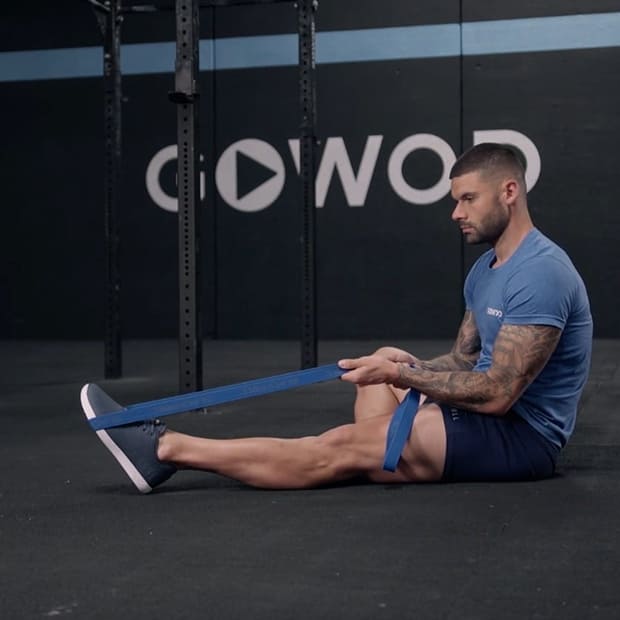
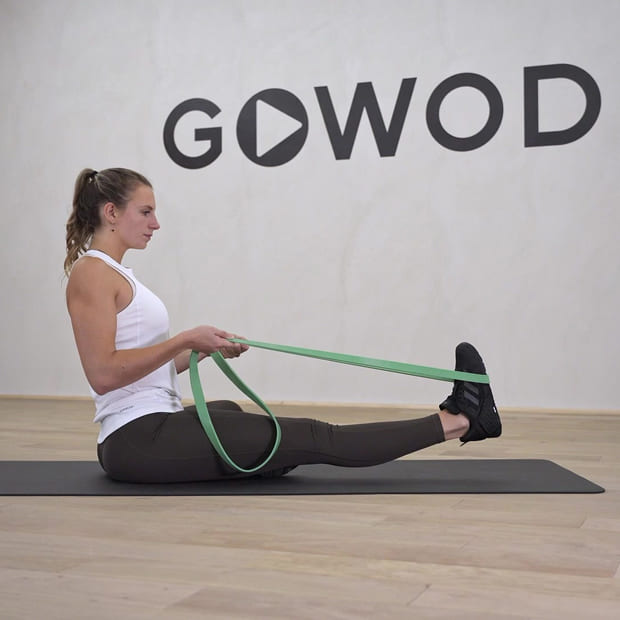
| Focus | Details |
|---|---|
| Timing | Repeat for 1 min. |
| Stimulus | Stretching at the back of your thigh and knee |
| Instructions |
• Extend your leg flat • Place your opposite foot against your thigh • While rolled back, grab the foot of your extended leg |
| Targeted areas |
Hamstrings Calves Lumbar |
| Equipment required | None |
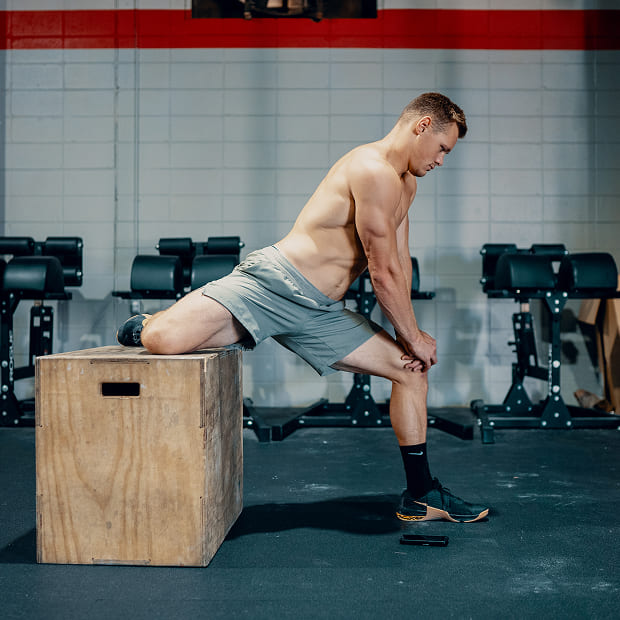
| Focus | Details |
|---|---|
| Timing | Repeat for 1 min. |
| Stimulus | Tension in the hip of the back leg and a stretch in the hamstring of the front thigh. |
| Instructions |
• Phase 1: Wide lunge with your stomach pulled in and your torso straight. • Phase 2: Keep your front leg straight and lean your torso towards your front foot. • Maintain a slow and controlled rhythm while keeping your back flat. |
| Targeted areas |
Hamstrings Hips |
| Equipment required | None |
| Focus | Details |
|---|---|
| Timing | Repeat for 1 min. |
| Stimulus | The pressure should allow you to remain relaxed. |
| Instructions |
• Place the roller on your lumbar region • Keep feet flat on the floor • Maintain a rhythmic rate of 50 movements per minute |
| Targeted areas | Lumbar |
| Equipment required | Foam roller |
| Focus | Details |
|---|---|
| Timing | Repeat for 1 min. |
| Stimulus | The pressure should allow you to remain relaxed. |
| Instructions |
• Place the roller under your upper back • Cross your arms and keep feet flat • Maintain a rhythmic rate of 50 movements per minute |
| Targeted areas | Traps |
| Equipment required | Foam roller |
Take our FREE mobility and flexibility test to identify your strengths and areas for improvement. In minutes, get a detailed breakdown of each body zone with insights and personalized guidance to progress.
Lower back tightness after deadlifts reflects the specific demand the lift places on the spinal extensor muscles throughout the movement.
Maintaining a neutral spine against a heavy external load requires the erector spinae and multifidus to contract isometrically, resisting the tendency of the load to flex the lumbar spine. Electromyographic analysis of the deadlift shows meaningful lumbar paraspinal activation, particularly during the more flexed portions of the lift (Escamilla et al., 2002), and this demand is repeated across every rep of every set. The deadlift's hip-hinge pattern also places substantial load on the hamstrings and glutes, and when hip mobility is limited, additional flexion demand can shift onto the lumbar spine.
Key mechanisms at play include:
This is why lower back tightness after deadlifts is rarely resolved by treating the lower back alone. The hamstrings, hip flexors, and thoracic spine often share the load, and often the tightness.
For a full routine built specifically around the deadlift, check out our blog Brooke Wells mobility routine, featuring targeted preparation and recovery work from CrossFit athlete Brooke Wells.
Different structures around the spine and posterior chain contribute to this tightness for different reasons. Understanding these relationships helps explain why a broad routine, rather than a single stretch, is often more effective.
| Area | Common issue | Why it happens | Performance impact |
|---|---|---|---|
| Erector spinae | Significant muscular tension. | Sustained isometric contraction resisting lumbar flexion throughout each rep. | Restricts comfortable spinal flexion and rotation. |
| Multifidus | Localized fatigue. | Deep segmental stabilization of the lumbar spine throughout the lift. | Can reduce fine control of individual lumbar segments. |
| Hamstrings | Increased muscular tension. | Extensive involvement in the hip-hinge pattern. | Can limit hip flexion and forward bending. |
| Hip flexors | Reduced extensibility. | Compensate when hip extension is limited during lockout. | Can restrict comfortable hip extension. |
From a GOWOD perspective, these areas do not operate independently. Limited hip mobility can shift additional flexion demand onto the lumbar spine during the lift, placing extra strain on the erector spinae to maintain stability.
Lower back tightness after deadlifts is not just a comfort issue; it can also carry over into how the next session feels and how you perform.
When the erector spinae and hamstrings remain tight and fatigued, the spine may not maintain its position as effectively in the following session. For lifters training regularly, this may lead to:
Research on post-exercise recovery techniques suggests that structured interventions, combined with adequate rest between sessions, are associated with faster reductions in soreness, perceived fatigue, and markers of muscle damage following resistance training (Dupuy et al., 2018). Mobility work targeting the erector spinae, hamstrings, and hip flexors supports this process, rather than replacing it.
The most effective approach is based on consistency and on targeting the muscles that carried the load, rather than simply stretching the lower back more aggressively.
A structured approach may include:
The goal is not to stretch the lower back as far as possible, but to reduce the tightness that builds up from the specific demands of the lift.
GOWOD's approach is based on individual assessment, identifying where your specific tightness and restrictions exist, whether that is the erector spinae, hamstrings, or hip flexors, and prioritizing those areas. By starting with a personalized assessment, you can focus on what is actually driving your lower back tightness rather than following a generic routine.
You can also explore GOWOD's broader mobility routine for lower back wellness, for ongoing lower back care beyond deadlift days.
From there, you can access a full mobility library of guided exercises to build targeted routines that evolve with your training.
If lower back pain is accompanied by pain radiating into the leg, numbness, tingling, or weakness in the leg, changes in bladder or bowel control, or numbness in the saddle area, seek immediate medical attention, as this may indicate a nerve or disc-related issue, including cauda equina syndrome, which requires urgent care rather than mobility work.
Why does my lower back hurt after deadlifts?
Lower back tightness after deadlifts is usually linked to sustained isometric activation of the erector spinae and multifidus, which contract throughout each rep to resist lumbar flexion under load. Ordinary post-exercise muscular fatigue can also contribute.
Is lower back pain after deadlifts always something to worry about?
Ordinary muscular tightness is common and typically eases within a few days. However, pain that radiates into the leg, comes with numbness, tingling, or weakness, or is accompanied by changes in bladder or bowel control is different from ordinary soreness and requires prompt medical assessment.
Can mobility exercises help lower back tightness after deadlifts?
Mobility work targeting the erector spinae, hamstrings, and hip flexors may help ease tension and support recovery. Addressing the hamstrings and hip flexors, along with the lower back itself, is often more effective than treating the lower back in isolation.
How long should a lower back mobility routine take?
Effective routines do not need to be long. A few minutes of training performed consistently are often more useful than one long, infrequent session. The focus should be on targeting the muscles that carried the most load rather than duration alone.
Should I stretch before or after deadlifts?
Both serve different purposes. Mobility work before training may help you access a fuller, more controlled hip hinge for the session ahead. Work after training can help address tightness and support recovery in the erector spinae and hamstrings.
Do I need equipment for lower back mobility work?
Most of this work can be performed without equipment. Tools such as a foam roller can be used to add targeted pressure to the lower and upper back, though they are not required.
When should lower back pain after deadlifts be checked by a doctor?
If pain radiates into the leg, is accompanied by numbness, tingling, or weakness in the leg, changes in bladder or bowel control, or numbness in the saddle area, seek immediate medical attention. Ordinary muscular tightness from training does not typically present these features.
If lower back tightness keeps showing up after deadlifts, a generic stretch can offer temporary relief, but a personalized approach addresses what is actually driving it.
GOWOD analyzes your mobility, identifies your restrictions, and builds tailored routines around your body and your training. Whether you are looking to ease lower back tightness, support recovery between sessions, or lift with better spinal control, having a structured plan makes the difference.
With GOWOD, you get:
Download GOWOD now and start improving the way you move.
You’re only 3 steps away from unlocking your full potential.

Dupuy, O., Douzi, W., Theurot, D., Bosquet, L., & Dugué, B. (2018). An evidence-based approach for choosing post-exercise recovery techniques to reduce markers of muscle damage, soreness, fatigue, and inflammation: A systematic review with meta-analysis. Frontiers in Physiology, 9, 403. https://doi.org/10.3389/fphys.2018.00403
Escamilla, R. F., Francisco, A. C., Kayes, A. V., Speer, K. P., & Moorman, C. T. (2002). An electromyographic analysis of sumo and conventional style deadlifts. Medicine & Science in Sports & Exercise, 34(4), 682–688. https://doi.org/10.1097/00005768-200204000-00019