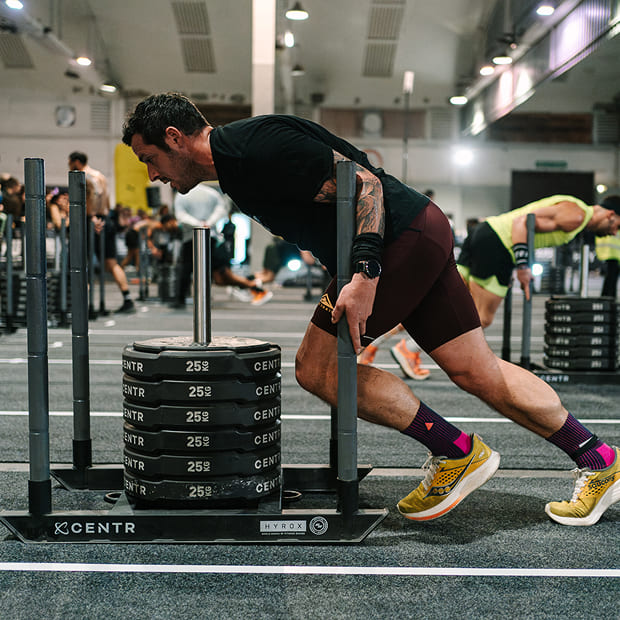
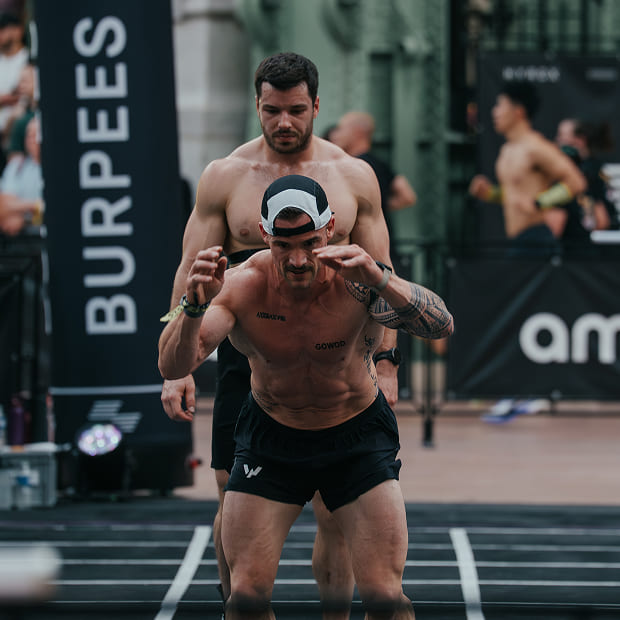
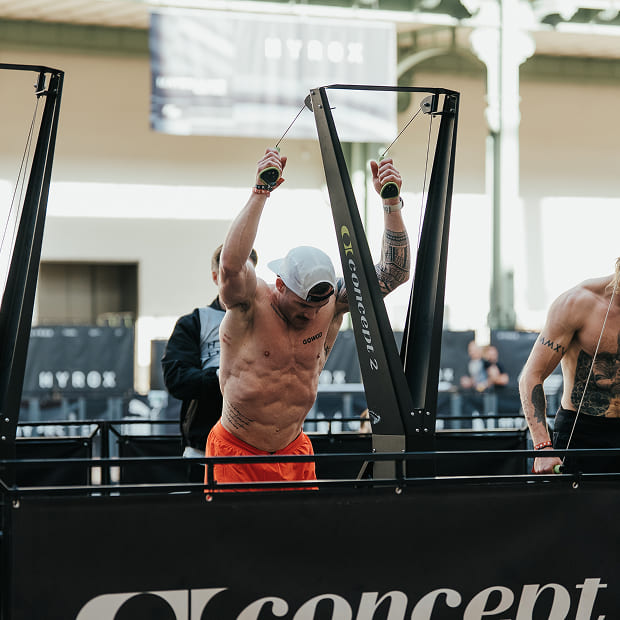
Delayed onset muscle soreness (DOMS) is one of the most common physiological responses to high-intensity exercise. Yet, it is an aspect of training that is often mismanaged. Characterized by muscular pain, stiffness, and reduced force production peaking at 24 to 48 hours post-exercise, DOMS is caused by an adaptive inflammatory response to mechanical muscle disruption. Put more simply, DOMS is a sign of soft tissue repair after exertion. Despite its prevalence, the recovery strategies most people employ or fail to employ in the hours following training do not always align with what the latest scientific evidence supports. This article examines the biological mechanisms underlying overnight muscle recovery and highlights evidence-based strategies for accelerating the process.
For a long time, DOMS was believed to be caused by lactic acid buildup. We now know that DOMS is the result of microscopic damage to muscle fibers, particularly the kind that occurs during eccentric movements, where the muscle lengthens under load. Examples of eccentric movement include the downward phase of a squat, the lowering portion of a bicep curl, or the landing phase of a jump. These movements place high mechanical stress on individual muscle fibers, causing small structural disruptions at the level of the sarcomere, or the basic contractile unit of a muscle fiber (Armstrong, 1984).
The body responds to this damage with an inflammatory cascade. This is an orchestrated repair process that recruits immune cells to the affected tissue, increases local blood flow, and initiates the rebuilding of damaged fibers. This process is not only normal but necessary. It is the biological mechanism through which muscles adapt and grow stronger. The soreness itself is a byproduct of this inflammatory process, which is why it peaks 24 to 48 hours after exercise, once the inflammatory response is fully underway (Cheung et al., 2003).
The goal of recovery isn't to eliminate inflammation, which is part of the repair process, but to give your body the best conditions to rebuild itself: good nutrition, good sleep, a calm nervous system.
The hours between finishing a workout and falling asleep are not passive downtime. They are an active physiological window in which the body clears inflammatory byproducts, rebuilds damaged fibers, and resets the nervous system for the next session. What you do in that window, from how you eat to how you move to how well you sleep, has a measurable effect on how quickly soreness resolves and how ready your muscles are to train again. The sections below break down each lever individually, starting with the one that matters most.
Of all the variables that influence muscle recovery between training sessions, sleep is the most powerful. And yet, many athletes make a significant mistake by overlooking the importance of sleep in recovery.
The majority of muscle repair and protein synthesis occurs during deep, slow-wave sleep. Deep sleep promotes muscle repair through several hormonal mechanisms. Just one bad night's sleep already reduces muscle protein synthesis by about 18% and shifts hormone balance toward a state unfavorable to recovery. (Lamon et al., 2021).
The practical implication of this information is straightforward. Following hard training days, sleep duration and quality are a primary recovery stimulus, not a luxury. Simpson and colleagues (2017) recommend that athletes prioritize sleep extension, or deliberately increasing the amount of sleeping time and aiming for eight to ten hours per night, in the 48-hour window following intense exercise. For athletes of all levels, this means treating bedtime with the same intentionality as training itself.
The nutritional window before sleep is another underutilized recovery opportunity available to athletes and active individuals alike.
Research by Res and colleagues (2012) demonstrated that consuming protein before sleep significantly increases overnight muscle protein synthesis, which is the process by which the body rebuilds damaged muscle fibers. Casein protein, which digests slowly and releases amino acids steadily over several hours, is well-suited to this window. A serving of cottage cheese, Greek yogurt, or a casein protein shake consumed 30 minutes before bed provides a sustained supply of building blocks throughout the night's repair process. At least one recent RCT showed that whey and casein produced identical overnight protein synthesis rates, making it even simpler to add this habit to a nightly routine (Tommelen et al., 2023). A meta-analysis by Zhou et al. (2024, IJSNEM) suggests a benefit from post-exercise and nighttime protein intake in athletic subjects. However, total daily protein intake remains the main determinant; the effect of timing is marginal once total intake is controlled for (Schoenfeld et al., 2013).
Anti-inflammatory nutrition also plays a meaningful role. Tart cherry juice, rich in anthocyanins with documented anti-inflammatory properties, can reduce muscle soreness and speed up recovery in both endurance and strength athletes (Howatson et al., 2010). But this needs to be qualified: since inflammation plays a role in adaptation, systematically taking nutritional anti-inflammatories like cherry juice could potentially limit progress. It should therefore be reserved for periods where fast recovery is the priority (competition, periods of very high training volume). Omega-3 fatty acids, found in fatty fish, flaxseed, and fish oil supplements, similarly attenuate the inflammatory response to eccentric exercise and can reduce perceived soreness (Jouris et al., 2011; Lv et al., 2020).
Hydration is frequently overlooked in this context. Cleary and colleagues (2005) showed that even mild dehydration, particularly when combined with heat exposure, significantly worsens muscle soreness and slows the recovery of muscle strength. Going to bed well-hydrated is a simple step with a strong impact.
Recovery is further affected by the state of your nervous system when you go to sleep. The autonomic nervous system operates on a spectrum between sympathetic activation, commonly known as the fight-or-flight response, and parasympathetic activation, the rest-and-digest state in which physiological recovery occurs. After an intense training session, the body remains in a state of relative sympathetic elevation, keeping the system primed for effort with an elevated heart rate and circulating cortisol. Deliberately transitioning into a parasympathetic state before sleep is one of the most effective ways to accelerate overnight recovery.
Foam rolling, targeted mobility work, and massage are evidence-supported tools for making this transition (Beardsley & Škarabot, 2015). This is where a structured evening mobility routine becomes particularly valuable. Rather than skipping recovery work or performing it haphazardly, follow a guided routine that targets the areas stressed during training to ensure a targeted approach to recovery while also providing the slow, intentional movement that signals safety to the nervous system. GOWOD's recovery-focused mobility sessions are designed with exactly this in mind, combining targeted muscle release that actively downregulates the nervous system to prepare the body for restorative sleep.
Furthermore, Pearcey and colleagues (2015) found that foam rolling performed after exercise significantly reduces perceived DOMS and improves recovery of dynamic performance measures in the 24 to 72 hours following training. A systematic review by Cheatham and colleagues (2015) found that self-myofascial release (SMR) improves range of motion and may help reduce muscle performance deficits and DOMS after intense exercise.
The debate between cold and heat for muscle recovery is longstanding in the field of sports science. Both have documented effects on DOMS, but they work through different mechanisms and are best suited to different contexts.
Cold water immersion reduces acute inflammation by constricting blood vessels and slowing metabolic activity in the affected tissue, thereby dampening the inflammatory response and reducing fluid accumulation. Heat, by contrast, promotes peripheral vasodilation, improving circulation, whilst relaxing muscle tissue and reducing perceived stiffness. Wang and colleagues (2021) confirmed that both heat and cold therapy meaningfully reduce pain in individuals with DOMS, with each modality showing significant effects on soreness perception relative to passive recovery alone. However, appropriate context and timing are important.
For overnight recovery specifically, heat has a practical edge. A warm bath or shower in the hour before sleep not only addresses muscle soreness directly but triggers a drop in core body temperature as you move into a cooler environment, which is a well-established physiological cue for sleep onset. The combination of improved circulation, muscle relaxation, and sleep priming makes it one of the simplest and most effective pre-sleep recovery tools available. Cold exposure, while valuable in the immediate post-exercise window, is better reserved for the hours directly after training rather than the period immediately before sleep.
Take our FREE mobility and flexibility test to identify your strengths and areas for improvement. In minutes, get a detailed breakdown of each body zone with insights and personalized guidance to progress.
Several popular recovery strategies are less likely to impact muscle soreness, though they may still have a role in sport-specific training.
Static stretching immediately after a workout, while beneficial for long-term flexibility, has limited evidence of reducing DOMS (Herbert & Gabriel, 2002). They do, however, act on the neurological component of muscle stiffness.
Careful: right before an explosive effort, these same static stretches can temporarily reduce your strength. Their usefulness therefore depends on the context. This is why GOWOD's Activation protocols, meant to be assigned before a sports session, don't include any static stretches on the muscles intended for the effort.
Non-steroidal anti-inflammatory drugs such as ibuprofen are commonly reached for after hard training, but their use for DOMS recovery is increasingly questioned. While they reduce pain perception, they do so by suppressing the very inflammatory process involved in muscle repair and adaptation. Trappe and colleagues (2002) found that ibuprofen use after eccentric exercise impaired muscle protein synthesis, suggesting that habitual NSAID use for training soreness may undermine the long-term adaptations associated with training.
Compression garments show modest benefits for circulation and perceived recovery, but are frequently overstated in their effects on DOMS itself. They are a useful adjunct, not a primary recovery strategy (Hill et al., 2014).
Putting the evidence together, a practical evening recovery sequence looks like this:
Within an hour of finishing training, prioritize hydration and eat a protein-rich meal. Follow this with 15 to 20 minutes of guided mobility work and self-myofascial release targeting the areas trained, using this time to shift deliberately from sympathetic to parasympathetic dominance. A warm shower or bath after mobility work deepens this transition, improves circulation, and primes sleep onset. In the last 30 minutes before bed, a casein-rich snack and, where appropriate, tart cherry juice or an omega-3 supplement set the biochemical conditions for overnight repair. The last step is to protect your sleep by aiming for at least 8 hours of high-quality rest in a cool, dark room without distractions.
GOWOD's Recover routines are built to fit this routine, providing structured, guided mobility sessions that combine muscle release with parasympathetic activation, taking the guesswork out of what to do and in what order.
Muscle soreness after hard training is a normal sign of muscle recovery and adaptation. Several evidence-based strategies to accelerate the repair process and decrease the duration of DOMS are highlighted in the article above. The overnight window is the body's primary recovery period. The biological processes that drive repair, growth hormone release and muscle protein synthesis are all active and optimizable during those hours. Behaviors done after training and before sleep can support, and even accelerate, these natural repair processes.
The protocol the science supports is not complicated: eat well after training and before bed, hydrate, release the muscles that were trained, use heat or cold depending on timing and context, shift your nervous system toward rest, and prioritize high-quality sleep. Done consistently, these habits can reduce next-day DOMS and support continued performance during training sessions.
You’re only 3 steps away from unlocking your full potential.

Armstrong, R.B. (1984). Mechanisms of exercise-induced delayed onset muscular soreness. Medicine & Science in Sports & Exercise, 16(6), 529–538.
Cheung, K. et al. (2003). Delayed onset muscle soreness: Treatment strategies and performance factors. Sports Medicine, 33(2), 145–164.
Lamon, S. et al. (2021). The effect of acute sleep deprivation on skeletal muscle protein synthesis and the hormonal environment. PLOS One, 16(1), e0245952.
Simpson, N.S. et al. (2017). Optimizing sleep to maximize performance: Implications and recommendations for elite athletes. Scandinavian Journal of Medicine & Science in Sports, 27(3), 266–274.
Res, P.T. et al. (2012). Protein ingestion before sleep improves postexercise overnight recovery. Medicine & Science in Sports & Exercise, 44(8), 1560–1569.
Trommelen, J. et al. (2023). Pre-sleep protein ingestion increases mitochondrial protein synthesis rates during overnight recovery from endurance exercise. The Journal of Physiology, 601(5), 2337–2352.
Zhou, J. et al. (2024). Effects of timing and types of protein supplementation on body composition, muscular strength, and physical performance in adults: A systematic review and meta-analysis. Nutrients, 16(1), 1–22.
Snijders, T. et al. (2015). Protein ingestion before sleep increases muscle mass and strength gains during prolonged resistance-type exercise training in healthy young men. Journal of Nutrition, 145(6), 1178–1184.
Howatson, G. et al. (2010). Influence of tart cherry juice on indices of recovery following marathon running. Scandinavian Journal of Medicine & Science in Sports, 20(6), 843–852.
Jouris, K.B. et al. (2011). The effect of omega-3 fatty acid supplementation on the inflammatory response to eccentric strength exercise. Journal of Sports Science & Medicine, 10(3), 432–438.
Lv, Z. et al. (2020). Omega-3 polyunsaturated fatty acids supplementation and exercise-induced muscle damage: A systematic review and meta-analysis. Frontiers in Physiology, 11, 593203.
Cleary, M.A. et al. (2005). Dehydration and symptoms of delayed-onset muscle soreness in hyperthermic males. Journal of Athletic Training, 40(4), 288–297.
Beardsley, C. & Škarabot, J. (2015). Effects of self-myofascial release: A systematic review. Journal of Bodywork and Movement Therapies, 19(4), 747–758.
Pearcey, G.E. et al. (2015). Foam rolling for delayed-onset muscle soreness and recovery of dynamic performance measures. Journal of Athletic Training, 50(1), 5–13.
Cheatham, S.W. et al. (2015). The effects of self-myofascial release using a foam roll or roller massager on joint range of motion, muscle recovery, and performance: A systematic review. International Journal of Sports Physical Therapy, 10(6), 827–838.
Weerapong, P. et al. (2005). The mechanisms of massage and effects on performance, muscle recovery and injury prevention. Sports Medicine, 35(3), 235–256.
Wang, Y. et al. (2021). Heat and cold therapy reduce pain in patients with delayed onset muscle soreness: A systematic review and meta-analysis of 32 randomized controlled trials. Physical Therapy in Sport, 48, 177–187.
Herbert, R.D. & Gabriel, M. (2002). Effects of stretching before and after exercising on muscle soreness and risk of injury: Systematic review. BMJ, 325(7362), 468.
Trappe, T.A. et al. (2002). Effect of ibuprofen and acetaminophen on postexercise muscle protein synthesis. American Journal of Physiology — Endocrinology and Metabolism, 282(3), E551–E556.
Hill, J. et al. (2014). Compression garments and recovery from exercise-induced muscle damage: A meta-analysis. British Journal of Sports Medicine, 48(18), 1340–1346.