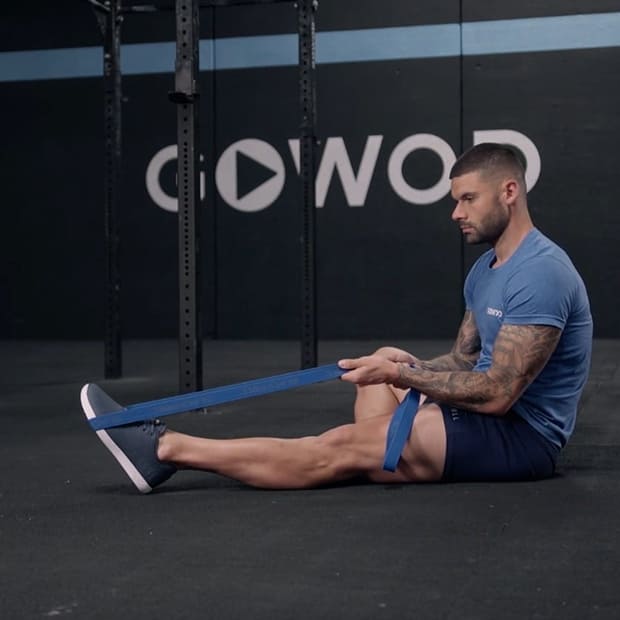
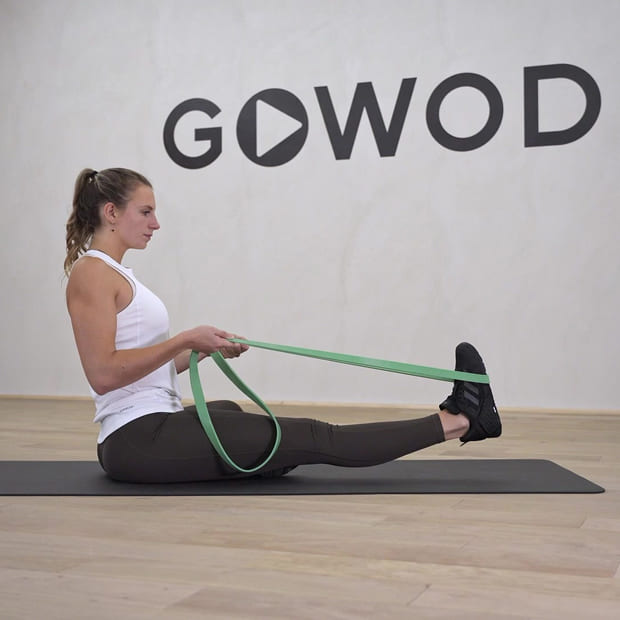
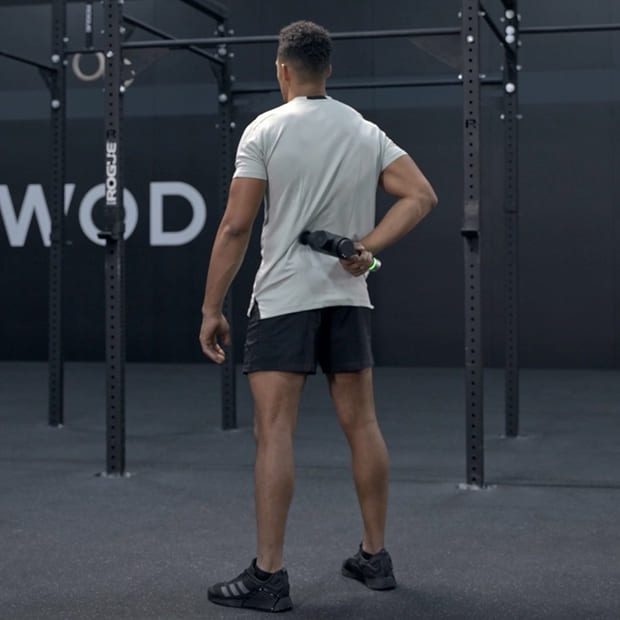
Sore quads after lunges are common, and the pattern of soreness reflects how the quadriceps are loaded over a long range of motion. Lowering into a lunge requires the quadriceps to control the descent eccentrically while the muscle is in a lengthened position, and eccentric contractions at longer muscle lengths produce greater muscle damage and more pronounced soreness than the same load at shorter lengths (Nosaka et al., 2005). The rear leg's rectus femoris contributes to this, since simultaneous hip extension and knee flexion lengthen it at both joints, a combination not present in the same way in the front leg.
A structured mobility and self-care routine can help address this by easing tension in the quadriceps and adductors and supporting recovery between sessions.
Below, we have selected five expert-backed movements to target quad soreness after lunges. These exercises work the quadriceps, adductors, and hip flexors, and can be added to your routine with minimal time or equipment.
A routine for post-lunge quad soreness should focus on easing tension in the quadriceps and adductors and restoring a comfortable range through the hip and knee:
| Focus | Details |
|---|---|
| Timing | Repeat for 1 min. |
| Stimulus | Tension in the hip of the back leg and a stretch in the hamstring of the front thigh. |
| Instructions |
• Phase 1: Wide lunge with your stomach pulled in and your torso straight. • Phase 2: Keep your front leg straight and lean your torso towards your front foot. • Maintain a slow and controlled rhythm while keeping your back flat. |
| Targeted areas |
Hamstrings Hips |
| Equipment required | None |
| Focus | Details |
|---|---|
| Timing | Repeat for 1 min. |
| Stimulus | Stretching at the front of the thigh |
| Instructions |
• Bend your knees close to the wall • Place rear foot against the wall • Keep torso straight |
| Targeted areas | Quadriceps |
| Equipment required | None |
| Focus | Details |
|---|---|
| Timing | Repeat for 1 min. |
| Stimulus | Stretching at your thigh |
| Instructions |
• Bend your knee and keep your foot in its natural position • Keep the opposite leg straight • Lie on the ground |
| Targeted areas |
Quad Hips |
| Equipment required | None |
| Focus | Details |
|---|---|
| Timing | Repeat for 1 min. |
| Stimulus | The pressure should allow you to stay relaxed. |
| Instructions |
• Lay with your thigh on the roller with your foot relaxed. • Use your hands to support your body. • Maintain a rhythmic rate of 50 movements per minute. |
| Targeted areas | Quad |
| Equipment required | Foam roller |
| Focus | Details |
|---|---|
| Timing | Repeat for 1 min. |
| Stimulus | The pressure should allow you to remain relaxed |
| Instructions |
• Sit with the roller perpendicular to your thigh • Move the roller up towards your pelvis • Maintain a rhythmic rate of 50 movements per minute |
| Targeted areas | Adductors |
| Equipment required | Foam roller |
Take our FREE mobility and flexibility test to identify your strengths and areas for improvement. In minutes, get a detailed breakdown of each body zone with insights and personalized guidance to progress.
Quad soreness after lunges reflects specific demands the movement places on the quadriceps and, in particular, the rectus femoris.
Lowering into a lunge requires the quadriceps to control the descent eccentrically, and this happens while the muscle is in a progressively lengthened position as the knee bends deeper. Eccentric loading at long muscle lengths is strongly associated with greater delayed-onset muscle soreness than the same eccentric load at shorter lengths, which helps explain why lunges and other deep, single-leg movements often produce more pronounced soreness than shallower exercises. The rear leg's rectus femoris experiences an additional strain, since simultaneous hip extension and knee flexion lengthen it at both joints at once during the movement, a combination not present in the same way for the front leg's rectus femoris.
Key mechanisms at play include:
This is why quad soreness after lunges is rarely resolved by treating the quadriceps as a single, uniform muscle group. The rear leg's rectus femoris in particular carries additional strain that the single-joint vasti muscles do not.
Different structures around the thigh and hip contribute to this soreness for different reasons. Understanding these relationships helps explain why a broad routine, rather than a single stretch, is often more effective.
| Area | Common issue | Why it happens | Performance impact |
|---|---|---|---|
| Quadriceps (vasti) | Increased muscular tension. | Eccentric loading through a long range during the lunge descent. | Restricts comfortable knee flexion and squatting depth. |
| Rectus femoris (rear leg) | Localized tightness. | Stretched across both the hip and knee simultaneously during the lunge. | Can limit hip extension and knee flexion together. |
| Adductors | Increased muscular tension. | Assist in stabilizing the front leg throughout the lunge. | Can restrict comfortable hip abduction and lateral movement. |
| Patellofemoral joint | Increased local sensitivity. | Repeated compressive loading through a deep range of knee flexion. | Can make squatting or lunging again feel uncomfortable until soreness resolves. |
From a GOWOD perspective, these areas do not operate independently. Tight adductors can affect how the front leg tracks during a lunge, which then places additional demand on the quadriceps to control the movement.
Quad soreness after lunges is not just a comfort issue, it can also carry over into how the next session feels and performs.
When the quadriceps and adductors remain tight and fatigued, the knee and hip may not move through their full, controlled range in the following session. For athletes training regularly, this may lead to:
Research on post-exercise recovery techniques suggests that structured interventions, combined with adequate rest between sessions, are associated with faster reductions in soreness, perceived fatigue, and markers of muscle damage following resistance training (Dupuy et al., 2018). Mobility work targeting the quadriceps and adductors supports this process, rather than replacing it.
The most effective approach is based on consistency and on targeting the muscles that carried the load, rather than simply stretching the quads more aggressively.
A structured approach may include:
The goal is not to stretch the quads as far as possible, but to reduce the tightness that built up from the specific demands of the movement.
Our approach is based on individual assessment, identifying where your specific tightness and restrictions exist, whether that is the quadriceps, rectus femoris, or adductors, and prioritizing those areas. By starting with a personalized assessment, you can focus on what is actually driving your quad soreness rather than following a generic routine.
From there, you can access a full mobility library of guided exercises to build targeted routines that evolve with your training.
If knee pain after lunges is sharply localized to the kneecap or patellar tendon, accompanied by swelling, a sensation of instability, or worsens rather than easing over a few days, seek assessment from a qualified healthcare professional, as this may indicate patellar tendinopathy or another knee issue rather than ordinary post-exercise muscle soreness.
Why are my quads sore after lunges?
Quad soreness after lunges is usually linked to eccentric loading of the quadriceps at long muscle lengths during the descent, a pattern strongly associated with delayed onset muscle soreness. The rectus femoris often contributes more to this soreness since it is stretched at both the hip and knee simultaneously.
Is quad soreness after lunges the same as knee pain?
Not necessarily. Muscular soreness in the quadriceps typically feels diffuse across the front of the thigh, while sharp, localized pain at the kneecap or patellar tendon is more likely to indicate a joint or tendon issue rather than ordinary muscle soreness.
Can mobility exercises help sore quads after lunges?
Mobility work targeting the quadriceps and adductors may help ease tension and support recovery. Addressing the rectus femoris specifically, alongside the rest of the quadriceps, is often more effective than treating the quadriceps as a single unit.
How long should a quad mobility routine take?
Effective routines do not need to be long. A few minutes of training performed consistently are often more useful than one long, infrequent session. The focus should be on targeting the muscles that carried the most load rather than duration alone.
Should I stretch before or after lunges?
Both serve different purposes. Mobility work before training may help you access a fuller, more controlled range for the session ahead. Work after training can help address soreness and support recovery in the quadriceps and adductors.
Do I need equipment for quad mobility work?
Most of this work can be performed without equipment. Tools such as a foam roller can be used to add targeted pressure to the quadriceps and adductors, though they are not required.
When should knee pain after lunges be checked by a professional?
If pain is sharply localized to the kneecap or patellar tendon, accompanied by swelling, a sensation of instability, or worsens rather than easing over a few days, seek assessment from a qualified healthcare professional. Ordinary muscular soreness from training does not typically present with these features.
If sore quads keep showing up after lunges, a generic stretch can offer temporary relief, but a personalized approach addresses what is actually driving it.
GOWOD analyzes your mobility, identifies your restrictions, and builds tailored routines around your body and your training. Whether you are looking to ease quad soreness, support recovery between sessions, or lunge with a fuller range of motion, having a structured plan makes the difference.
With GOWOD, you get:
Download GOWOD now and start improving the way you move.
You’re only 3 steps away from unlocking your full potential.

Dupuy, O., Douzi, W., Theurot, D., Bosquet, L., & Dugué, B. (2018). An evidence-based approach for choosing post-exercise recovery techniques to reduce markers of muscle damage, soreness, fatigue, and inflammation: A systematic review with meta-analysis. Frontiers in Physiology, 9, 403. https://doi.org/10.3389/fphys.2018.00403
Nosaka, K., Newton, M., Sacco, P., Chapman, D., & Lavender, A. (2005). Partial protection against muscle damage by eccentric actions at short muscle lengths. Medicine & Science in Sports & Exercise, 37(5), 746–753. https://doi.org/10.1249/01.mss.0000162691.66162.00